
Views: 0 Author: Site Editor Publish Time: 2025-10-17 Origin: Site


Static electricity can be a troublesome issue in many industries, from electronics to spray painting. It often leads to operational disruptions, product defects, and even safety hazards. This article explores how static electricity forms and its impact on various industries. We’ll discuss effective methods to eliminate static electricity and the importance of maintaining a static-free environment in the workplace.
Static electricity is the result of an imbalance of electric charges on the surface of materials. When two objects rub together, electrons move from one surface to another. This creates an excess of positive charge on one material and a negative charge on the other. In most cases, the imbalance is neutralized when the charges come into contact with a conductive surface, or through the process of grounding.
However, in many industrial settings, the process of eliminating static can be more complex. The charges may not be easily dissipated, leading to the need for more specialized methods, like ionization, to neutralize static. Static electricity poses a problem not only because of its tendency to discharge but also because of its ability to attract dust, debris, and particles that could contaminate products, particularly in sensitive environments such as cleanrooms and manufacturing lines.
The effects of static electricity go beyond a simple shock. In industries such as electronics manufacturing, small electrostatic discharges (ESD) can damage integrated circuits and microchips, leading to costly repairs and product failures. In the textile and printing industries, static electricity can cause fabrics and materials to stick together, disrupting production and affecting product quality. Moreover, static can attract particles, leading to contamination and flaws in finishes, as seen in spray painting and coating applications.
For businesses, static electricity not only results in damage to products but can also cause delays, reduce yield rates, and lower efficiency, leading to significant financial losses. By effectively managing and eliminating static electricity, companies can improve product quality, minimize downtime, and reduce waste, which ultimately boosts profitability.
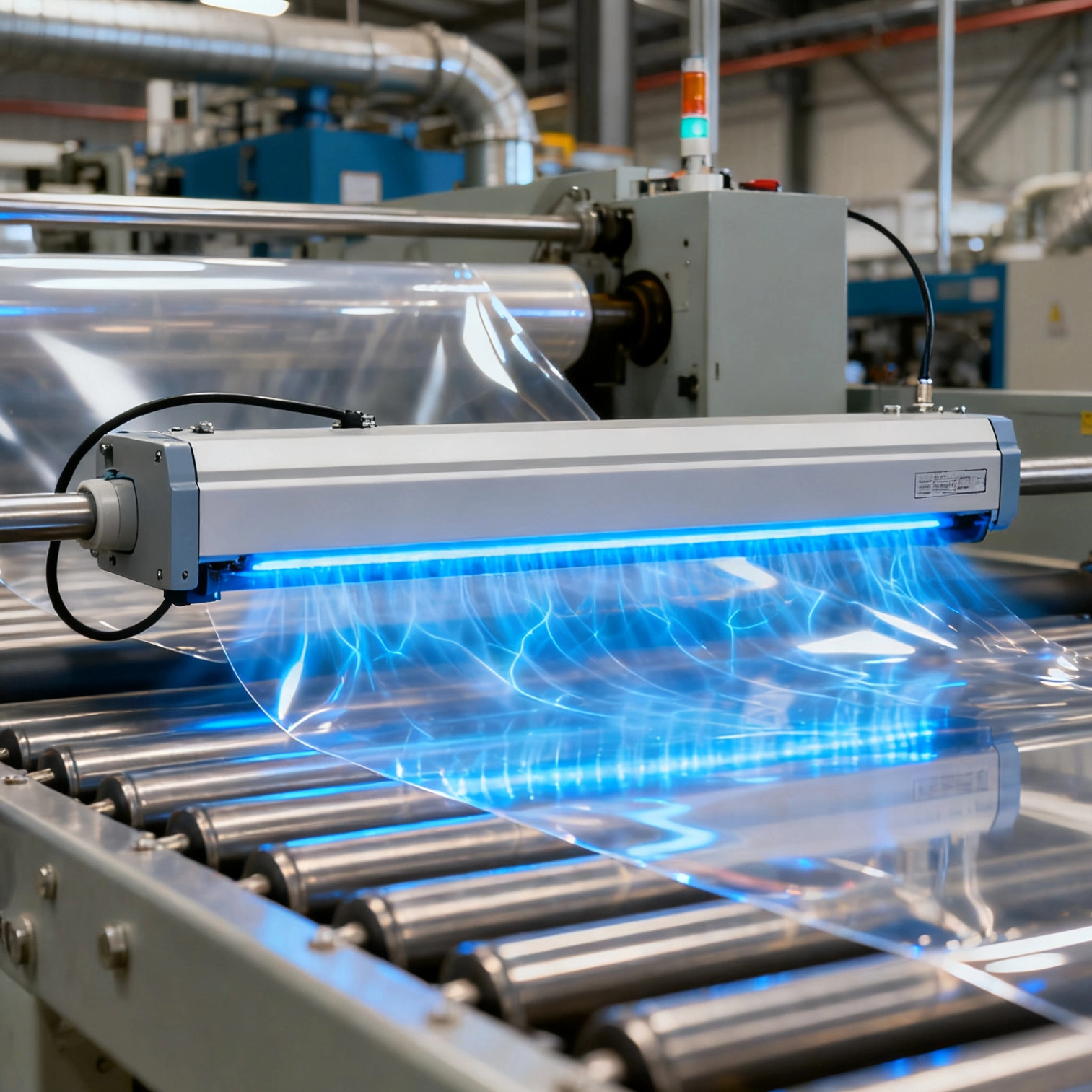
Understanding the causes of static electricity is the first step toward controlling and eliminating it. Below are the primary factors that contribute to static buildup.
Friction is the most common cause of static electricity. When two materials rub against each other, electrons from one material transfer to the other. The material that loses electrons becomes positively charged, while the material that gains electrons becomes negatively charged. This process is known as triboelectrification, and the amount of static generated depends on the materials involved. For example, rubber, plastics, and wool generate more static than metals or glass.
The ability of a material to accumulate or dissipate static electricity largely depends on its electrical properties. Insulating materials like plastics and rubber tend to build up static because they do not allow the flow of electrons. On the other hand, conductive materials like metals allow static charges to flow through them, neutralizing the buildup. In environments where static is an issue, using conductive or anti-static materials can help reduce the risk of charge accumulation.
Environmental conditions, such as temperature and humidity, play a significant role in static electricity buildup. In dry conditions, especially during winter months, static electricity is more likely to build up due to the lack of moisture in the air. Moisture in the air, on the other hand, can help dissipate static charges. High humidity levels make the air more conductive, allowing the charges to neutralize more easily. However, excessive humidity can also cause other issues, such as equipment malfunction, which is why maintaining the right balance is essential.
| Environmental Factor | Effect on Static Electricity | Impact |
|---|---|---|
| Low Humidity | Increases static buildup | More static discharges and ESD |
| High Humidity | Reduces static buildup | Slower ionization, potential malfunction |
| Temperature Extremes | Can affect materials' conductivity | May lead to inconsistent static control |
Static electricity can cause a variety of problems, particularly in sensitive industries. It affects not only the products but also the machinery and overall productivity. Below, we explore some of the most significant issues caused by static buildup.
Electrostatic discharge (ESD) occurs when a charged object comes into contact with a grounded surface, causing a rapid flow of electricity. In electronics manufacturing, even a small discharge can damage sensitive components like semiconductors, causing failures that are difficult to detect and repair. Components can suffer immediate damage or experience latent failures that may not show up until later, leading to costly returns and warranty claims. In addition to hardware damage, ESD can also affect product performance and reliability, leading to decreased customer satisfaction.
Static electricity attracts dust and debris from the air, causing contamination on surfaces and products. In industries like spray painting, static can cause paint particles to float and settle unevenly, leading to surface imperfections. Similarly, in the textile industry, static can cause fabrics to stick together, resulting in wrinkles, tangles, and uneven fabric quality. In cleanroom environments, static attraction can lead to contamination that jeopardizes the entire production process.
Static buildup can also interfere with equipment and machinery. It can cause malfunctions in automated systems, disrupt the movement of materials, or cause machine malfunctions, leading to costly downtime. Moreover, the safety risks associated with static electricity, particularly in explosive or volatile environments, make it crucial to address this issue promptly and effectively.
Eliminating static electricity requires a combination of techniques, each tailored to the specific needs of the industry. The following methods are among the most effective ways to manage and neutralize static electricity.
Grounding is the most common and straightforward method to eliminate static electricity. It involves connecting an object generating static to a conductive surface, usually through a wire, allowing the static charge to flow safely into the ground. Grounding works best for conductive materials, such as metal, but may not be effective for insulating materials like plastics.
For applications where grounding isn't feasible, grounding straps or mats are often used to provide a safe path for static charges. In industries where high precision is required, grounding tools, equipment, and even personnel can help maintain static-free conditions.
Ionizers are specialized devices that neutralize static electricity by releasing positive and negative ions into the air. These ions attach to the charged surfaces and neutralize the static buildup. There are two main types of ionizers:
Corona Ionizers (Electrical): These ionizers use high voltage to generate ions, which are then dispersed into the surrounding environment with the help of a fan or air movement.
Alpha Ionizers (Non-Electrical): These use radioactive materials like Polonium-210 to generate ions, providing an effective solution for environments that require intrinsic safety and where electricity cannot be used.
Ionizers are often used in environments where grounding is impractical, or additional support is needed to neutralize static in hard-to-reach areas. They are commonly used in industries like electronics manufacturing, cleanroom environments, and even spray painting.
Maintaining the right level of humidity can significantly reduce static buildup. In dry conditions, static electricity is more likely to accumulate, but adding moisture to the air can help mitigate this. Industrial humidifiers are commonly used in areas where humidity control is essential. However, too much moisture in the air can lead to other issues, such as equipment malfunction, so it is important to balance humidity levels appropriately for both static control and operational efficiency.
In addition to ionization and grounding, using anti-static materials and equipment is another effective strategy for preventing static buildup. Some of the most common tools include:
Anti-static mats: Placed on work surfaces to prevent static accumulation.
Anti-static wristbands: Worn by operators to safely discharge any static they may carry.
Anti-static clothing: Designed to dissipate static charges from workers' bodies.
These materials are especially important in industries like electronics manufacturing, where even a small static charge can cause significant damage.
In electronics manufacturing, the risk of ESD is high, and strict measures must be implemented to prevent damage to sensitive components. Using ionizers, grounding equipment, and anti-static materials is essential in these environments. Regular testing and maintenance of static control systems, including ionizers and grounding points, are critical to ensuring consistent performance and preventing damage to components.
In the spray painting industry, static electricity can cause dust particles to settle on freshly painted surfaces, leading to imperfections. To combat this, ionizers should be placed in the work area to neutralize static before it attracts dust. Additionally, ensuring proper ventilation and humidity control can help achieve an even coating.
Static in textiles and plastics can cause materials to stick together or attract dust and debris. Using anti-static mats, ionizers, and electrostatic discharge (ESD) workstations helps mitigate these issues. In addition, controlling humidity levels is vital in preventing static buildup during fabric processing and molding.
Maintaining static control systems, such as ionizers, is crucial to ensure their long-term effectiveness. Regular testing and cleaning will help avoid issues like an unbalanced ionizer, which could exacerbate static problems instead of solving them.
Ionizers must be regularly tested for performance, particularly their decay time (the speed at which they neutralize static) and ion balance (the evenness of positive and negative ions). If an ionizer fails to provide a balanced output, it could actually create static rather than eliminating it.
Ionizers require regular cleaning, especially their emitter tips, which can accumulate dust and debris. Following the manufacturer's cleaning instructions will help keep the ionizers in optimal condition.
Proper calibration ensures that ionizers meet the required performance standards. Compliance with industry standards, such as those set by the ESD Association, is essential for ensuring that static control measures are both effective and safe.
Effectively managing static electricity is key to boosting productivity, safety, and product quality. Strategies such as grounding, ionization, and using anti-static materials are vital. Regular maintenance and the right static control methods reduce risks and optimize operations. GD Decent Industrial offers advanced static control products that help prevent ESD damage, reduce contamination, and maintain smooth operations, ensuring long-term success.
A: Static electricity is an imbalance of electric charges on the surface of materials. It's important to eliminate it to prevent damage to electronics, contamination of products, and interference with machinery.
A: Static electricity can be eliminated using methods like grounding, ionization, humidification, and anti-static materials such as mats and wristbands.
A: Ionizers neutralize static electricity by releasing positive and negative ions into the air, neutralizing charged surfaces.
A: Yes, increasing humidity can help reduce static buildup by making the air more conductive, allowing charges to dissipate.
A: Anti-static mats and wristbands help safely discharge static electricity, preventing damage to sensitive components and reducing contamination in sensitive areas.
A: Regular maintenance, including cleaning and testing ionizers and grounding equipment, ensures optimal performance and reduces static-related risks.
