
Views: 0 Author: Site Editor Publish Time: 2025-11-22 Origin: Site


Static electricity costs the electronics industry billions of dollars every year. From damaged semiconductors to contaminated circuit boards, the invisible threat of electrostatic discharge (ESD) affects production yields, product reliability, and bottom-line profitability across the global electronics manufacturing sector.
With the electrical and electronics market projected to exceed $4.9 trillion by 2027 and U.S. electrical equipment production alone representing more than $58 billion annually, the stakes have never been higher. Behind these figures are millions of devices built from semiconductors, sensors, and circuit boards that power telecommunications, computing, automotive, and industrial systems. Protecting these assemblies against electrostatic discharge has become central to static control in electronics manufacturing.
The good news? Static electricity is controllable and can be eliminated with proper anti-static solutions in electronics manufacturing. Since 2010, GD Decent Industrial Co., LTD has been at the forefront of static elimination technology, serving over 2,000 customers worldwide with innovative ESD solutions backed by 43 technical patents.
In this comprehensive guide, you'll learn everything you need to know about static electricity threats, prevention methods, and the latest technologies for protecting your electronics manufacturing operations.
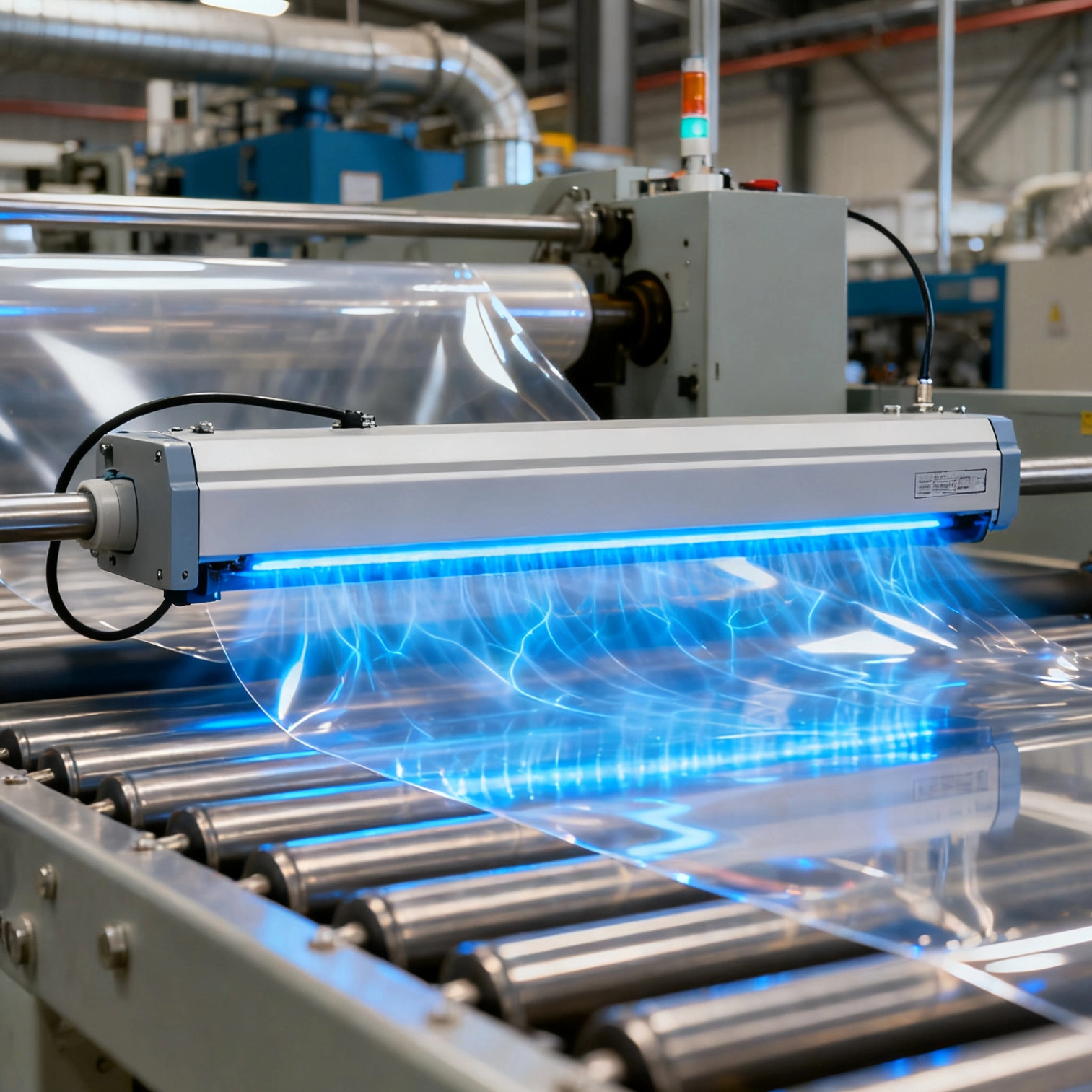
All objects, whether conductive or non-conductive, carry an electric charge. Static electricity refers to the presence of a non-neutral electric charge on an object. This charge can be either positive (meaning the object has more protons than electrons) or negative (meaning the object has more electrons than protons).
Think of it like water in connected containers. If both containers sit on a level surface with a pipe between them, the water level will equalize in each container. The same principle applies when two objects are electrically bonded together—both objects equalize to the same electrical charge.
The difference in charge between two objects relates directly to electric potential difference, or voltage, measured in volts (V). The bigger the difference in charge, the higher the voltage, and the more energy will be released in an electrostatic discharge. In industrial processes, potential can exceed 30 kV—compared to the 3-5V that powers many common electronic devices.
Static electricity is commonly thought of as the product of friction, but the terms "contact" and "separation" more accurately describe how static is generated. There are three primary mechanisms:
Friction (Triboelectric Effect): When any two objects of different materials come into contact and then separate, static electricity is generated. Almost all materials are neutral in charge when not in contact with other materials. Once two materials are pressed into close contact, the balance of surface electrons becomes disturbed. If the materials are then separated rapidly—by sliding one against the other or pulling one off the other—the displaced electrons have difficulty returning to normal balance. This leaves one material positively charged and the other negatively charged.
Induction: For conductive materials where electrons can flow freely on the surface, placing the material in an electric field causes charge repulsion. Positive and negative charges transfer due to anisotropic attraction, thereby generating static electricity.
Conduction: Similarly, for conductive materials, contact with a charged object causes charge transfer, generating static electricity.
Common sources of static in industrial settings include:
Liquid or powder flowing through pipes, hoses, or openings
Blending and mixing operations
Spraying and coating processes
Filling operations
Conveyor belt systems
Human movement and walking body voltage
Semiconductors dominate the electronics sector both in value and in vulnerability. The global semiconductor market has surpassed half a trillion dollars and continues to grow as demand accelerates for mobile devices, automotive electronics, and industrial controls.
As geometries shrink and circuitry density increases, risks compound. Even trace charges can compromise circuit board ESD safety by puncturing insulating layers or weakening oxide structures. Assemblies are often compromised not by visible failures but by latent damage introduced during handling.
The human body itself is a significant source of static discharge. When a person walks, their arms rub against their body and their shoe soles interact with the floor's surface, generating an electrical charge that accumulates on their body. This is called walking body voltage. The moment a person touches an object, any potential difference between their body and that object is discharged—potentially destroying sensitive components.
With 43 technical patents and a dedicated R&D team comprising 45% of our workforce, GD Decent's engineers have studied ESD vulnerabilities across thousands of manufacturing scenarios, developing targeted solutions for each challenge.
Electrostatic adsorption causes serious contamination in electronics manufacturing. IC production requires clean rooms or ultra-clean workshops, yet few domestic manufacturers achieve particle-free environments. Current requirements have reduced acceptable dust particle size from 0.3μm to 0.1μm.
Here's the problem: if the particle size of adsorbed dust exceeds the line width of the circuit, products are easily scrapped. A positively charged material attracts negatively charged particles (and vice versa), meaning static-charged surfaces act like magnets for airborne contaminants.
In electronics assembly, this contamination compromises solder joints, interferes with component placement, and reduces overall product quality.
Electrostatic discharge is the process of charge accumulation reaching a critical point. When a conductor approaches an object with accumulated charge, sudden discharge occurs. If a semiconductor device carrying static electricity is placed alone or loaded into a circuit module, it can be broken down immediately.
The damage isn't always obvious. Devices affected by electrostatic discharge may not show immediate functional damage but will have compromised reliability. The result is shorter service life, reduced performance, or field failures that appear long after products pass initial testing.
According to industry statistics, factors leading to electronic product failure include static electricity accounting for 8% to 33% of cases. Annual losses due to static electricity damage reach billions of dollars globally.
Electrostatic discharge radiates radio waves across various frequencies, causing significant interference to surrounding microprocessors. Effects include:
Chaotic program instructions
Corrupted data
Unknown error messages
System malfunctions
These problems are often overlooked initially, but once a malfunction occurs, the consequences can be severe—especially in critical applications like medical devices, automotive systems, or industrial controls.
Bonding and grounding are the foundation of effective static control in electronics manufacturing. Understanding the difference is essential:
Grounding (Earthing) is the best and safest way to discharge built-up static charge. To ground an object is to connect it to the earth via a grounding rod or electrode. Grounding drains static charges as they are produced, removing excess charge by transferring electrons between the object and the earth.
Key specifications for effective grounding:
A resistance of 1 megaohm or less is generally adequate for static dissipation
Metal grounding systems should have less than 10 ohms resistance
Resistance exceeding 10 ohms indicates a discontinuous path—usually due to dirt, system fatigue, worn connections, or system deterioration
Bonding connects two or more pieces of conductive equipment together using wires, cables, or other connectors to equalize their static charge. Sparks cannot occur between objects at the same electrostatic potential.
Important: Containers need bonding even if they're touching, because paint or other coatings may reduce conductivity. Simply touching another object doesn't guarantee an effective connection for static charge transfer.
Items requiring bonding include gaskets, hoses and piping, spray nozzles, thermometers, and probes—anything conductive but separated from ground by nonconductive equipment.
Items such as drums and tanks can have their conductivity affected by paints, coatings, or product buildup. These coatings can be thick enough to prevent electrostatic charges from dispersing. The solution is grounding assemblies with clamps that can pierce paint for good metal-on-metal connection.
When selecting bonding/grounding assemblies, consider:
Does the item have a paint or coating that needs piercing?
How rugged does the assembly need to be for the environment?
What clip type is needed (flat, dimpled, or with teeth)?
Are objects stationary or do they need to move?
What wire length is required?
Is cleanability important?
Does it need to handle heat?
Should wire be insulated or non-insulated?
Effective ESD-protected workstations incorporate multiple layers of protection:
Grounded work surfaces
ESD-safe mats and flooring
Proper tool selection and storage
Restricted access to trained personnel only
Component identification and handling procedures
GD Decent offers complete workstation solutions with integrated ionizing equipment designed for seamless ESD protection, helping technicians work confidently with sensitive components.
Personnel are often the greatest source of static discharge in electronics manufacturing. Essential personal protective equipment includes:
Wrist Straps: Connect operators directly to ground, continuously dissipating any charge buildup. Must be worn snugly against the skin and tested regularly.
Conductive Footwear: Heel straps or conductive shoe soles provide continuous grounding as workers move around the facility.
Anti-static Clothing: Smocks and garments made from static-dissipative materials prevent charge accumulation on clothing.
Before any measurement or handling operation, personnel should discharge any accumulated static by touching a grounded object. For optimal protection, this should be done periodically during work—especially in dry conditions.
When grounding and bonding aren't sufficient—particularly for insulating materials that cannot be grounded—ionizers become indispensable.
An ion is an electrically charged atom, produced when there's a change in the electrical balance of a neutral atom. If the outer shell takes on an extra electron, a negative ion forms. If it loses an electron, a positive ion forms. Ionizers generate both positive and negative ions that neutralize static charges on nearby objects.
Active static elimination devices (also called ionizers or neutralizers) emit a field of positive and negative ions that neutralize static electricity on production equipment or products. These devices come in many configurations:
AC-powered ionizers: Generate alternating positive and negative ions
DC Pulse technology ionizers: Provide precise ion balance control
Air-assisted models: Use airflow to direct ions toward target surfaces
Ionizing air bars: Ideal for production lines and web processes
GD Decent's Ionizer Solutions: Our high-frequency ionizing air bars, including the KE-36X series, deliver precise ion balance for demanding electronics manufacturing environments. Capable of neutralizing static down to near-zero levels, these solutions represent cutting-edge static elimination technology backed by 43 patents and developed by our 120+ R&D engineers.
Passive anti-static devices such as tinsel, cord, and brushes operate on the self-energizing or induction principle—they're energized by the static field present on the process material surface. No outside power source is needed.
Advantages of passive devices:
Low cost
Easy installation and replacement
Effective reduction to around 2,000 volts or lower
Ideal for numerous applications where complete neutralization isn't required
The choice between active and passive devices depends on your specific requirements:
Choose Active Ionizers When:
Complete static neutralization (near-zero) is required
Working with highly sensitive components
Passive devices don't provide sufficient protection
Consistent, controllable performance is essential
Choose Passive Devices When:
Moderate static reduction is acceptable
Budget constraints exist
Simple installation is preferred
Applications don't require zero-level neutralization
Many facilities combine both approaches for optimal protection. GD Decent's technical team provides customized assessments to determine the ideal combination for your specific manufacturing needs.
Static electricity builds up more readily in dry environments because moisture in the air helps disperse static charges on objects. Increasing humidity in industrial environments is one of the most effective passive static control methods.
Recommended Practice: Maintain humidity levels above 60% through industrial humidifiers. This approach reduces static generation at the source while complementing other protection measures.
However, humidity control isn't always feasible—some processes require dry environments, and excessive humidity can cause other problems like corrosion or condensation. In these cases, other static control methods become even more critical.
Conductive and static-dissipative flooring provides continuous grounding for personnel and mobile equipment. Options include:
Conductive floor tiles
ESD floor mats
Conductive coatings for existing floors
Grounded floor systems
Proper installation is crucial—flooring must be connected to the facility's grounding system and tested regularly to verify continued effectiveness.
Clean air supports ESD control by reducing airborne particles that can become charged and contaminate products. Consider:
HEPA filtration systems
Positive pressure environments
Regular air quality monitoring
Proper ventilation design
Printed circuit board assembly is especially exposed to electrostatic hazards. In severe cases, discharge destroys boards outright, forcing costly rework or scrap. More often, damage is subtle—low-voltage discharges create latent defects that erode device lifespan, leading to warranty claims and customer dissatisfaction.
Critical Rule: First Ground, Then Signal
When using oscilloscopes or test equipment to measure circuit boards, you must first connect the probe ground, then connect the probe to the signal line. If you first connect to the test point and then ground, static electricity will discharge directly through the signal circuit, potentially damaging internal devices.
This principle appears in PCB design as well—notice how PCIE cards have clock signal gold fingers that are shorter than other pins. This ensures ground contact occurs first during insertion, allowing discharge before signal lines connect.
GD Decent has implemented successful static elimination systems for PCB manufacturers across Asia, helping reduce defect rates and improve yields significantly.
Semiconductor manufacturing demands the highest levels of ESD protection due to:
Extreme sensitivity of wafers and dies
Ultra-clean environment requirements
High-value products at risk
Complex automated handling systems
Even trace charges can puncture insulating layers or weaken oxide structures at the microscopic scale of modern semiconductors. Comprehensive ESD programs combining grounding, ionization, and environmental controls are essential.
The coatings industry actually uses electrostatic charges intentionally—spray guns add charge to paint or powder as it exits, and grounded substrates attract the charged particles for even coverage with less waste.
However, this process requires meticulous grounding. Ignition at the spray gun when the substrate isn't effectively grounded can cause the spray gun to shoot flames as the highly charged spray substance catches fire from a spark.
Static electricity generates when low-conductivity liquids (like oil or fuel) flow through non-conductive pipes. This is especially dangerous during loading or unloading operations with flammable liquids.
Charges accumulate on pipe walls while opposite charges are carried away with the liquid. Since non-conductive pipes cannot dissipate the charge, it remains on the pipe wall—creating ignition risks near filling points.
Relaxation Time: After dispensing operations, allow time before opening/closing lids, cleaning, or taking samples. One minute is acceptable for many liquids, allowing charges to dissipate naturally.
Before implementing anti-static solutions, assess your facility's specific risks:
Identify ESD-sensitive areas and processes
Evaluate current static levels using field meters
Set protection goals based on component sensitivity
Establish compliance standards (internal and regulatory)
Develop budget for equipment, training, and ongoing maintenance
GD Decent's technical team offers comprehensive facility assessments to identify static risks and recommend tailored solutions based on your specific manufacturing environment.
Facility Requirements:
Grounding system installed and verified
ESD flooring in sensitive areas
Humidity control where feasible
Ionizers positioned at critical points
ESD-safe workstations equipped
Equipment Specifications:
All equipment properly grounded
Bonding connections verified
Static eliminators maintained
Test equipment calibrated
Personal Protective Equipment:
Wrist straps available and tested
Conductive footwear provided
Anti-static garments issued
PPE testing schedule established
Handling and Storage:
ESD-safe packaging used
Storage areas protected
Handling procedures documented
Component identification system in place
Training is often the difference between stable yields and costly mistakes. An effective ESD training program covers:
Basic static electricity principles
Identification of ESD-sensitive components
Proper use of protective equipment
Correct handling procedures
Recognition of ESD damage symptoms
Emergency procedures
Regular refresher courses keep awareness high and reinforce proper habits. Creating a culture of ESD awareness means every employee understands their role in protecting products.
Ongoing verification ensures your ESD program remains effective:
Grounding System Verification:
Test all ground connections regularly
Check resistance values against specifications
Inspect for wear, corrosion, or damage
Document all test results
Equipment Testing:
Verify ionizer performance and ion balance
Test wrist straps and footwear daily
Check workstation grounding weekly
Calibrate test equipment annually
Compliance Monitoring:
Conduct regular ESD audits
Review incident reports
Track yield data for ESD-related trends
Update procedures based on findings
Several international standards govern ESD protection in electronics manufacturing:
IEC 61000-4-2: Electromagnetic compatibility—Testing and measurement techniques for electrostatic discharge immunity. This standard defines test methods and severity levels for ESD immunity.
IEC 61326-1: Electromagnetic compatibility requirements for electrical equipment for measurement, control, and laboratory use. Specifies immunity requirements including ESD testing.
ANSI/ESD S20.20: Development of an Electrostatic Discharge Control Program. Provides administrative and technical requirements for establishing, implementing, and maintaining an ESD control program.
Standard ESD immunity testing includes:
Contact discharge: 4KV typical test level
Air discharge: 8KV typical test level
These tests simulate real-world discharge events that products may encounter during manufacturing, handling, and use.
GD Decent's Commitment: All our products undergo rigorous testing to meet international standards. Our 43 technical patents reflect continuous innovation in meeting and exceeding industry requirements.
Connecting Signal Before Ground: This common mistake allows static to discharge through sensitive signal circuits. Always establish ground connections first.
Touching Probe Needles Directly: Human contact transfers body voltage directly to measurement circuits. Use proper handling techniques.
Neglecting Floating Ground Situations: When measuring floating circuits, discharge static to a known ground before connecting test equipment.
Inconsistent Grounding Practices: Intermittent use of wrist straps or footwear leaves gaps in protection.
Inadequate Grounding Resistance: Resistance above 10 ohms for metal systems indicates problems—usually dirt, worn connections, or system deterioration.
Using Non-ESD-Safe Materials: Regular plastics and materials can generate and hold static charges. Use only ESD-safe alternatives in protected areas.
Poor Maintenance of Anti-static Equipment: Ionizers need cleaning and calibration; wrist straps need testing; floors need verification.
Insufficient Humidity Control: Dry environments dramatically increase static generation, especially in winter months.
Lack of Employee Training: Untrained personnel are the greatest ESD risk factor.
Infrequent Auditing: Problems develop over time if not caught through regular verification.
Ignoring Latent Defect Data: Field failures often trace back to ESD damage that passed initial testing.
Underestimating ESD Risks: "It hasn't been a problem" often precedes costly ESD events.
Understanding the true cost of ESD damage justifies investment in protection:
Direct Costs:
Scrapped products and materials
Rework and repair labor
Warranty claims and replacements
Production downtime
Indirect Costs:
Customer dissatisfaction
Reputation damage
Lost future business
Regulatory compliance issues
Statistical data shows static electricity accounts for 8% to 33% of electronic product failures, with annual global losses reaching billions of dollars.
When evaluating anti-static solutions, consider:
Initial equipment and material costs
Installation and implementation expenses
Training program development
Ongoing maintenance requirements
Expected yield improvements
Reduction in field failures
Customer satisfaction improvements
Most manufacturers find that comprehensive ESD programs pay for themselves quickly through reduced losses and improved quality.
With over 2,000 satisfied customers worldwide, GD Decent has helped manufacturers across diverse industries significantly reduce ESD-related losses and improve production quality. Our customers report:
Measurable yield improvements
Reduced warranty claims
Improved customer satisfaction
Lower overall production costs
Enhanced product reliability
For over 15 years, GD Decent Industrial Co., LTD has specialized exclusively in static elimination equipment. With headquarters in Shenzhen and a manufacturing facility in Dongguan, we've built our reputation on quality, innovation, and customer success.
Our 270+ dedicated employees bring expertise and commitment to every product and customer interaction.
What sets GD Decent apart is our commitment to innovation:
45% of our workforce is dedicated to research and development
43 technical patents cover advanced static elimination technologies
Continuous improvement drives new solutions for evolving challenges
Our R&D team doesn't just follow industry trends—we help create them, developing next-generation static elimination solutions that address emerging manufacturing challenges.
Serving 2,000+ customers has taught us that great products require great support:
Custom solutions tailored to specific manufacturing challenges
Technical consultation from experienced engineers
After-sales support ensuring continued performance
Global reach with local expertise
GD Decent offers comprehensive anti-static solutions including:
High-frequency ionizing air bars (KE-36X series and others)
Industrial ionizers and neutralizers
Complete static elimination systems
Customized solutions for unique applications
Every product reflects our commitment to quality, backed by rigorous testing and our 43 technical patents.
The static control industry continues evolving:
Advanced Ionization Systems: New ionizer designs offer improved ion balance, faster neutralization, and better energy efficiency.
Smart Monitoring and IoT Integration: Connected devices enable real-time monitoring of static levels, equipment performance, and environmental conditions.
New Anti-static Materials: Material science advances provide better static dissipation in packaging, flooring, and work surfaces.
Automation in ESD Control: Automated systems reduce reliance on human compliance while providing consistent protection.
GD Decent's R&D team continues developing next-generation static elimination solutions to meet these evolving industry demands.
Tomorrow's electronics manufacturing will face new ESD challenges:
Smaller component geometries increase sensitivity
Higher circuit densities compound risks
New manufacturing processes introduce unknown static sources
Sustainability requirements demand energy-efficient solutions
Staying ahead of these challenges requires continuous innovation—a commitment central to GD Decent's mission.
The most effective approach combines multiple layers of protection: proper grounding and bonding, ionization equipment for insulating materials, environmental controls including humidity management, personal protective equipment, and comprehensive training programs. GD Decent provides integrated solutions addressing all these requirements.
Testing frequency depends on the equipment type:
Wrist straps: Daily before use
Footwear: Daily before entering ESD areas
Workstation grounding: Weekly
Ionizers: Monthly performance verification
Grounding systems: Quarterly comprehensive testing
All equipment: Annual calibration and certification
Yes. ESD can cause immediate catastrophic failure (complete device destruction) or latent damage (weakened components that fail later). Latent damage is particularly costly because products may pass initial testing but fail in the field, leading to warranty claims and customer dissatisfaction.
Maintain humidity levels above 60% for optimal static prevention. Higher humidity helps dissipate static charges naturally. However, some processes cannot tolerate high humidity, making other static control methods essential.
Costs vary based on facility size, sensitivity requirements, and existing infrastructure. A basic program might require minimal investment, while comprehensive protection for semiconductor manufacturing requires significant resources. Contact GD Decent for a customized assessment and quotation.
Watch for these indicators:
Unexplained product failures or yield drops
Components sticking together or to surfaces
Dust accumulation on products
Personnel experiencing static shocks
Intermittent equipment malfunctions
Increased field failure rates
Grounding is essential but not sufficient alone. Insulating materials cannot be grounded and require ionization. Personnel need wrist straps and footwear. Environmental controls reduce static generation. A comprehensive program addresses all static sources.
Ionizers generate positive and negative ions that neutralize static charges on nearby objects. When a positively charged object encounters negative ions (or vice versa), the charges combine and neutralize. GD Decent's patented ionizer technology provides precise ion balance for effective neutralization.
Consider your specific applications, sensitivity requirements, environmental conditions, and budget. Contact GD Decent for expert guidance—our technical team will assess your needs and recommend optimal solutions.
Static electricity poses a significant but controllable threat to electronics manufacturing. Understanding the mechanisms of static generation, recognizing the three major threats (ESA, ESD, and EMI), and implementing comprehensive anti-static solutions protects your products, your yields, and your reputation.
Effective static control requires a multi-layered approach: proper grounding and bonding, ionization equipment, environmental controls, personal protective equipment, and ongoing training and verification. No single solution addresses all static risks—but a well-designed program dramatically reduces ESD-related losses.
Partner with GD Decent Industrial Co., LTD for your anti-static solutions. With 15+ years of expertise, 43 technical patents, 270+ dedicated employees, and a track record serving 2,000+ customers worldwide, we're your trusted partner for comprehensive static elimination solutions.
Contact GD Decent today for a free consultation. Discover how our innovative anti-static solutions can protect your electronics manufacturing operations, improve your yields, and enhance your product quality.
