
Views: 0 Author: Site Editor Publish Time: 2025-11-22 Origin: Site


In modern industrial production, precision electronic manufacturing, and laboratory environments, static electricity acts like an invisible double-edged sword. It may cause instantaneous breakdown of precision components, lead to dust adsorption affecting product quality, and even create fire hazards on the production line. Understanding what is the purpose of the ion fan has become essential knowledge for manufacturers seeking to protect their products, improve quality, and maintain safe working conditions.
An ion fan is a specialized device that generates charged ions by ionizing air to neutralize static electricity. Widely used in electronic manufacturing, precision instruments, printing, medical, and other fields, the ion fan's core function is to efficiently eliminate static electricity on the surface of objects and avoid product quality problems or safety hazards caused by static electricity adsorption and discharge.
This comprehensive guide explores everything you need to know about ion fans, from their fundamental working principles to practical applications across various industries. Whether you're dealing with ESD-sensitive electronic components, packaging materials that stick together, or dust contamination issues, this article will help you understand how ion fan technology can solve your static-related challenges.
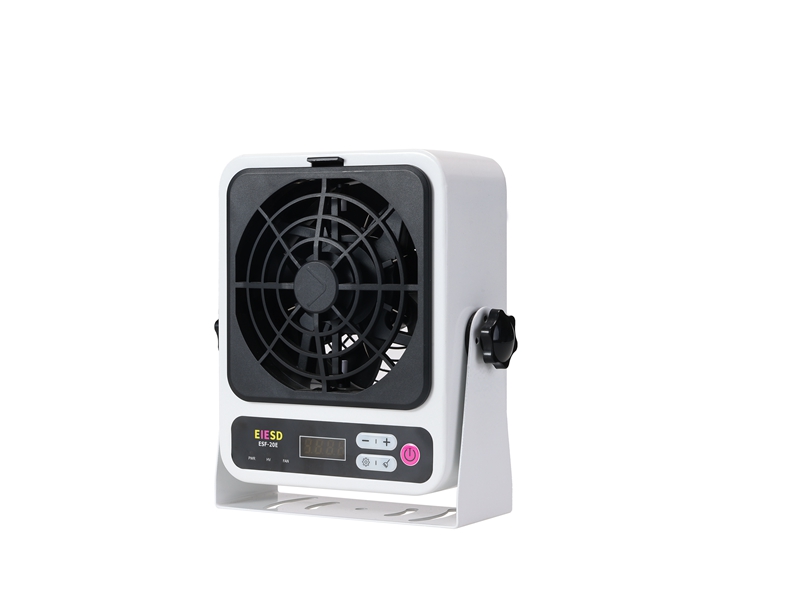
An ion fan, also known as a fan-type electrostatic eliminator or ionizing air blower, is a static elimination device that combines two essential functions: air circulation and ionization. Unlike standard ventilation fans that simply move air, an ion fan generates positive and negative ions through high-voltage discharge to neutralize static electricity attached to products while effectively removing dust particles.
The ion fan represents a significant advancement in industrial static control technology. While passive methods like grounding can only address conductive materials, ion fans actively neutralize charges on both conductive and non-conductive surfaces, making them indispensable in modern manufacturing environments where plastics, films, and other insulating materials are commonly processed.
GD Decent Industry Co., Ltd., established in 2010, has emerged as a leading manufacturer specializing in static electricity elimination equipment. With headquarters in Shenzhen and a factory in Dongguan employing over 270 staff members, GD Decent has developed 43 technical patents and serves more than 2,000 customers worldwide with comprehensive static control solutions.
The working principle of an ion fan is based on the corona discharge effect. Inside the device are ionizing electrodes that create a high-voltage field. When electrical current flows through these electrodes, it triggers an electronic discharge that produces both positive and negative ions. These ions are then propelled into the surrounding air by the fan system.
Here's the step-by-step process of how an ion fan eliminates static:
Ion Generation: High voltage is applied to sharp electrode points, creating a corona discharge that ionizes air molecules
Ion Distribution: The built-in fan system distributes these charged ions across the target area
Charge Neutralization: Positive ions are attracted to negatively charged surfaces, while negative ions are attracted to positively charged surfaces
Static Elimination: When ions reach charged surfaces, they neutralize the static electricity, bringing the surface to a neutral state
Dust Release: Once static charges are neutralized, dust particles lose their electrostatic attraction and can be easily removed
The speed of ion movement depends on the strength of the electric field, following the equation v = k × E. Optimal results are achieved when there is a balanced output of both positive and negative ions, which is why quality ion fans are designed to maintain precise ion balance.
A well-designed industrial ion fan consists of several critical components:
Ionizing Electrodes: These are typically made from durable materials like tungsten or pure copper. Quality electrodes can achieve 3-second discharge times for fast static neutralization. The electrode design significantly impacts both performance and longevity.
Fan System: High-performance radial fans or axial fans distribute ions across the work area. Variable speed controls allow operators to adjust airflow based on application requirements, typically ranging from 45 CFM to 110 CFM.
Power Supply Unit: Industrial ion fans require specialized high-voltage power supplies that can generate the electrical field necessary for corona discharge while maintaining safe operation parameters.
Housing and Mounting System: Industrial-grade housings protect internal components and provide mounting options. Many designs feature dual-purpose brackets that allow both desktop placement and overhead mounting for versatile installation.
Control Interface: Modern ion fans include controls for airflow adjustment, power management, and in some cases, feedback systems that work with electrostatic sensors for automated static control.
The fundamental purpose of an ion fan is to neutralize electrostatic charges that accumulate on materials and products during manufacturing processes. Static electricity is generated whenever two surfaces come into contact and then separate—a phenomenon called triboelectric charging. This occurs constantly in industrial environments during activities such as:
Materials moving over rollers and conveyor systems
Plastic films unwinding from rolls
Products being handled, packaged, or assembled
Friction between machine parts and processed materials
Without proper static control, these charges can reach thousands of volts, causing serious problems. Ion fans solve this by continuously flooding the work area with balanced positive and negative ions that neutralize charges as quickly as they form.
The Decent Industrial EIESD ion fan exemplifies this technology, efficiently eliminating static electricity on object surfaces to prevent quality problems and safety hazards caused by static adsorption and discharge.
In electronics manufacturing, electrostatic discharge (ESD) represents one of the most significant threats to product quality and reliability. Sensitive electronic components can be damaged or destroyed by discharges as low as 100 volts—far below the threshold humans can feel.
Ion fans serve as a critical line of defense in ESD Protected Areas (EPAs) by:
Neutralizing charges on non-conductive materials that cannot be grounded
Providing backup protection alongside wrist straps and grounding systems
Eliminating charges on isolated conductors
Protecting sensitive components during handling, assembly, and testing
According to ESD Association guidelines, ionization is an essential component of a complete static control program, particularly for dealing with insulating materials like circuit board substrates and plastic device packages.
Static electricity causes dust and particles to cling stubbornly to surfaces through electrostatic attraction. This is why freshly manufactured products often become contaminated despite being produced in seemingly clean environments—the static charges act like magnets for airborne particles.
Ion fans address this problem in two ways:
Preventing Attraction: By neutralizing static charges, ion fans eliminate the electrostatic force that attracts dust to surfaces
Releasing Particles: When charged particles are neutralized, they lose their grip on surfaces and can be removed by the airflow
Customer testimonials highlight this benefit. As one GD Decent customer reported: "The ion fan quality is very good, it finally solved our packaging line disaster, materials stopped jamming, dust adhesion dropped 90%."
Static-related problems cause significant production losses through:
Material jams when charged films or sheets stick together
Misfeeds in printing and packaging equipment
Increased rejection rates due to contamination
Slowdowns for manual static removal
Equipment damage from static discharge
By eliminating these issues, ion fans help manufacturing operations run smoothly and efficiently. Production lines can operate at higher speeds with fewer interruptions, directly impacting throughput and profitability.
Product quality suffers when static electricity is not properly controlled:
Surface defects from dust contamination
Uneven coating or printing due to electrostatic interference
Component failures from ESD damage
Appearance issues from particle adhesion
Functional problems from contaminated assemblies
Ion fans help ensure consistent quality by maintaining static-free conditions throughout the manufacturing process.
Static electricity poses genuine safety risks in industrial environments:
Fire and Explosion Hazards: Static discharge can ignite flammable materials, solvents, and dust clouds
Electric Shocks: Workers can receive painful shocks from highly charged materials
Equipment Damage: Sudden discharges can damage sensitive control systems
Ion fans reduce these risks by keeping static charges at safe levels, contributing to a safer working environment for employees.
GD Decent Industry Co., Ltd. offers a comprehensive range of ion fan solutions specifically designed for industrial static elimination and dust control. The company's EIESD (Electrostatic Eliminator Industrial Series Device) ion fans represent the culmination of years of research and development, backed by 43 technical patents.
Key characteristics of GD Decent ion fans include:
Stable and Effective Static Neutralization: Engineered for consistent performance in demanding industrial environments
Rapid Discharge Times: Pure copper ion needles achieve 3-second discharge for fast static elimination
Adjustable Airflow: Variable speed controls (typically 45-110 CFM) allow customization for different applications
Flexible Mounting Options: Dual-purpose brackets support both desktop and hanging installation
Wide Coverage Area: Air volume coverage of approximately 40cm × 60cm per unit
Industrial-Grade Construction: Durable housing designed to withstand factory conditions
What sets GD Decent apart is the ability to integrate ion fans with a complete ecosystem of static control products:
Ionizing Bars: For applications requiring static elimination across wide web materials or production lines, GD Decent's EIESD ionizing bars provide complementary coverage. These fixed-installation devices generate strong ion flow to neutralize charges on moving materials.
Electrostatic Sensors: The DC-W08Z electrostatic sensor enables real-time monitoring of static voltage levels. Based on charge induction principles using vibration capacitance technology, these sensors provide:
Non-contact surface static voltage monitoring
Alarm functions when static exceeds safe thresholds
Integration with ionization systems for automated control
Small size, light weight, and low power consumption
Ion Nozzles: The ESZ-10 ion nozzle combines compressed air with ionization technology for targeted static elimination and cleaning in localized areas, particularly useful for small spaces and high static density zones.
GD Decent's static control solutions extend beyond ionization equipment:
Aluminum Foil Anti-Static Materials: These materials protect sensitive electronic components from static discharge during handling and storage, providing an additional layer of ESD protection.
Heat Resistant Label Solutions: Specially designed labels that maintain durability and readability in high-temperature environments while supporting anti-static applications and traceability requirements.
Antistatic Bags, Films, and Foams: Complete packaging solutions that maintain static protection throughout the supply chain.
Customers who implement GD Decent static control systems experience:
Dust-free production conditions
Static-free manufacturing environments
Safe production conditions for workers and products
Reduced downtime and improved workflow
Enhanced product quality and production efficiency
Expert technical support and customization services
With R&D team members accounting for 45% of the workforce, GD Decent maintains a strong focus on innovation and customer-specific solutions.
Desktop ion fans are compact units designed for workstation-level static control. They're ideal for:
Electronics assembly benches
Inspection and quality control stations
Repair and rework areas
Laboratory workspaces
Small-scale packaging operations
Features typically include adjustable angle brackets for directional control, variable fan speeds, and compact footprints that don't consume valuable workspace. The air flow coverage of approximately 40cm × 60cm makes them suitable for individual workstations.
Overhead ionizers mount above workstations to provide static protection without occupying bench space. These units offer:
Maximum coverage area from elevated positions
Unobstructed workspace below
Even ion distribution across larger areas
Integration with cleanroom ceiling systems
Overhead systems are particularly valuable in applications where bench space is limited or where the work involves frequent movement of materials across the station.
For production line applications, modular industrial ion fan systems provide extended coverage. Systems like the HAUG Ion Fan can be configured with:
Multiple fan modules (1 to 8 units) for scalable coverage
Lengths from 204mm to 1604mm
Up to two ionization bars per module for high performance
T-slot mounting for easy installation and adjustment
Series connection capability for extended installations
These systems can be configured as "air gates" at entry and exit points of production areas, ensuring materials are static-free as they move through different process stages.
For demanding environments requiring exceptional durability and cleanability, stainless steel ion fans offer:
Corrosion resistance for harsh environments
Easy cleaning for hygiene-sensitive applications
High air volumes for large surface coverage
Compatibility with cleanroom requirements
The SI F200 stainless steel ionization fan, for example, generates free-flowing air volume of 300 m³/h with an effective range of 0.01 to 2.0 meters.
Ion fans can be classified by their ionization method:
Unipolar Ionizers: Release only negative ions (or in some cases, only positive ions). These are effective in environments where electronic equipment creates an abundance of positive charges, as they restore ion balance.
Bipolar Ionizers: Generate both positive and negative ions simultaneously. This approach provides balanced neutralization regardless of the polarity of surface charges and is generally preferred for most industrial applications.
Most modern industrial ion fans use bipolar or pulsed DC technology to ensure balanced ion output and effective neutralization of both positive and negative charges.
The electronics industry faces perhaps the greatest static-related challenges due to the extreme sensitivity of modern components. Ion fans are essential at multiple stages:
PCB Manufacturing and Handling: Circuit boards accumulate charge during fabrication and handling. Ion fans neutralize these charges to prevent ESD damage to traces and components.
SMT Assembly Lines: Surface mount technology involves placing tiny components on boards. Static can cause components to jump off placement heads or attract to wrong locations. Ion fans maintain neutral conditions for precise placement.
Component Assembly Workstations: Manual and semi-automated assembly stations benefit from benchtop ion fans that protect both incoming components and work-in-progress assemblies.
Testing and Quality Control: Static interference can affect test results and damage devices under test. Ion fans ensure accurate testing and protect valuable components.
Packaging Operations: Final products must be protected during packaging. Ion fans eliminate charges that could attract contamination or cause latent ESD damage.
GD Decent's products serve the semiconductor industry, display industry, and 3C (Computer, Communication, Consumer electronics) industry with comprehensive static control solutions.
Static electricity creates numerous problems in printing operations:
Sheet-Fed Printing: Paper sheets can stick together, causing misfeeds and multi-sheet pulls. Ion fans neutralize sheet charges for reliable feeding.
Web Printing: Continuous web materials generate significant static from unwinding and contact with rollers. Ion fans along the web path prevent static buildup.
Digital Printing: Static can affect toner or ink transfer, causing image quality issues. Ion fans maintain neutral conditions for consistent print quality.
Label Printing and Converting: Labels must release cleanly from backing material and apply without static-related problems. Ion fans support reliable label handling.
Ink Adhesion: Proper ink adhesion requires neutral surface conditions. Ion fans help ensure consistent ink transfer and adhesion.
Packaging operations handle various materials that readily generate static:
Packaging Machines: Films, foils, and papers become charged during handling. Ion fans integrated into packaging machinery eliminate these charges.
Filling Operations: Products and containers must be static-free to prevent contamination and ensure accurate filling.
Bag and Pouch Production: Plastic bags and pouches are highly prone to static. Ion fans throughout the production process prevent sticking and handling problems.
Shrink Wrapping: Heat-shrink films generate significant static. Ion fans before and after shrink tunnels control these charges.
Carton Handling: Even paperboard generates static during high-speed handling. Ion fans support reliable carton erecting and sealing.
Plastic materials are inherently prone to static generation:
Film Extrusion: Extruded films accumulate charge as they cool and contact handling equipment. Ion fans along the film path neutralize these charges.
Blown Film Production: The continuous bubble of plastic film in blown film processes requires static control to prevent handling issues and dust attraction.
Thermoforming: Static on formed parts can cause handling problems and contamination. Ion fans at part ejection points solve these issues.
Injection Molding: Molded parts often carry significant static charges when ejected from molds. Ion fans at ejection points and handling stations neutralize these charges.
Sheet and Profile Production: Extruded sheets and profiles benefit from ion fans to control static-related dust attraction and handling problems.
The pharmaceutical industry has stringent cleanliness and safety requirements:
Cleanroom Applications: Ion fans help maintain particle-free conditions by preventing electrostatic attraction of contaminants.
Tablet and Capsule Handling: Pills can stick together or to equipment due to static. Ion fans ensure smooth material flow.
Blister Packaging: Pharmaceutical blister packs require static-free conditions for reliable sealing and product protection.
Medical Device Assembly: Many medical devices contain sensitive electronic components requiring ESD protection during assembly.
Sterile Packaging: Static-free conditions help maintain sterile barriers and prevent contamination.
Glass processing faces unique static challenges:
Flat Glass Manufacturing: Large glass sheets readily accumulate static, attracting dust that affects quality and coatings.
Glass Coating Processes: Coatings require clean, static-free surfaces for proper adhesion and uniformity.
Display Glass Production: Electronic display glass must be pristine and ESD-safe throughout processing.
Optical Glass Processing: High-precision optical components cannot tolerate contamination from static-attracted particles.
Fabrics and nonwovens are notorious for static problems:
Fabric Processing: Textiles generate static during handling, causing cling and handling difficulties.
Nonwoven Production: Nonwoven materials like filters and wipes require static control for proper layering and bonding.
Garment Manufacturing: Static causes fabrics to cling and misbehave during cutting and sewing operations.
Synthetic Fiber Handling: Man-made fibers are particularly prone to static buildup requiring active neutralization.
When evaluating ion fans for industrial applications, several key parameters determine performance:
Ion Balance: Measured in volts, ion balance indicates how well the ionizer produces equal quantities of positive and negative ions. Quality industrial ion fans maintain balance within ±10 to ±35 volts. Out-of-balance ionizers can actually charge previously neutral objects.
Discharge Time: This measures how quickly an ionizer can neutralize a charged object, typically tested from 1000V to 100V per ESD standards. Fast ion fans achieve discharge times of 3 seconds or less at close range.
Coverage Area: The effective area over which an ion fan can maintain static control. Desktop units typically cover 40cm × 60cm, while larger industrial systems cover proportionally greater areas.
Airflow Volume: Measured in CFM (cubic feet per minute) or m³/h, airflow determines how effectively ions are distributed. Adjustable airflow (e.g., 45-110 CFM) allows optimization for different applications.
Operating Distance: The effective range from the ionizer to the target surface. Different applications require different distances—some ion fans are effective from 0.01 to 2.0 meters.
Ion fan performance is affected by environmental conditions:
Temperature: Most industrial ion fans operate within +5°C to +45°C (41°F to 113°F). Extreme temperatures can affect ion generation and component longevity.
Humidity: Optimal operation typically occurs between 45% and 75% relative humidity. Very dry conditions (below 30% RH) increase static generation, while very humid conditions can affect ion lifetime and travel distance.
Air Quality: Clean air supply ensures optimal ionizer performance. Contaminated environments may require more frequent maintenance.
Altitude: Air density affects ionization efficiency. High-altitude installations may require adjustment or specialized equipment.
Industrial ion fans have specific electrical requirements:
Input voltage options (110V/220V AC selections available on many models)
Low power consumption (quality units operate efficiently)
High-voltage generation circuits for ionization
Safety features including grounding and overcurrent protection
Regular verification ensures ion fans maintain effective operation:
Ion balance verification using charged plate monitors
Discharge time testing per ANSI/ESD STM3.1 standards
Airflow verification
Visual inspection of emitter points
Documentation for quality management systems
Proper ion fan placement is critical for effective static control:
Distance to Target: Position ion fans at the manufacturer's recommended distance from work surfaces—typically between 15cm and 100cm depending on the model and application.
Angle of Installation: Direct airflow toward the area where static control is needed. Adjustable mounting brackets allow angle optimization.
Airflow Direction: Consider how ionized air will flow across work areas. Ensure ions reach all areas requiring protection without creating turbulence that could spread contamination.
Avoiding Dead Zones: In larger areas, multiple ion fans may be needed to ensure complete coverage without gaps.
Modern ion fans offer flexible installation options:
Desktop Placement: Compact units can sit directly on workbenches, ideal for individual workstations.
Overhead Mounting: Ceiling or rack-mounted units keep work surfaces clear while providing broad coverage.
Adjustable Brackets: Dual-purpose brackets allow both flat placement and hanging installation, with 180-degree rotation capability.
T-Slot Integration: Industrial systems often feature T-slot mounting for easy integration with existing equipment frames and conveyors.
Ion fans work best as part of a comprehensive static control program:
With Ionizing Bars: Use ion fans at workstations while ionizing bars address moving web materials on production lines.
With Electrostatic Sensors: Connect ion fans with monitoring systems like GD Decent's DC-W08Z sensor for real-time feedback and automated control.
With Grounding Systems: Ion fans complement—but don't replace—proper grounding of personnel and conductive materials.
With ESD-Safe Materials: Use ion fans alongside ESD flooring, work surfaces, and packaging materials for complete protection.
Air-gates use multiple ion fans to create static-free transition zones:
Position ion fans at entry and exit points of production areas
Configure units in series for extended coverage
Ensure complete neutralization of materials passing through
Connect multiple units to common power supplies for simplified installation
Implementing ion fan technology delivers measurable quality improvements:
Elimination of Static-Related Defects: Cosmetic defects from dust adhesion and functional defects from ESD damage are dramatically reduced
Improved Surface Finish Quality: Products emerge cleaner and more visually appealing
Better Coating and Printing Adhesion: Neutral surfaces accept coatings and inks more uniformly
Reduced Contamination: Particle counts decrease when electrostatic attraction is eliminated
Consistent Output Quality: Reduced variability in product quality batch-to-batch
Ion fans contribute directly to operational performance:
Reduced Downtime: Fewer stops to address static-related jams and problems
Fewer Material Handling Issues: Materials feed and convey reliably without sticking
Higher Production Speeds: Lines can run faster when static doesn't cause problems
Lower Rejection Rates: Fewer defective products mean less waste and rework
Improved Throughput: More good products per shift
The financial impact of effective static control includes:
No Compressed Air Costs: Unlike air ionizers that require expensive compressed air, fan-type ionizers use ambient air, eliminating compressed air consumption costs
Low Energy Consumption: Modern ion fans are energy-efficient, typically consuming minimal power
Reduced Waste: Fewer defective products mean lower material costs
Lower Maintenance Costs: Reliable operation and simple maintenance minimize service expenses
Extended Equipment Life: Preventing static damage to machinery reduces repair and replacement costs
Ion fans contribute to safer workplaces:
Reduced Fire/Explosion Risk: Controlling static reduces ignition sources in environments with flammable materials
Fewer Electric Shocks: Workers experience fewer static shocks when handling materials
ESD Program Compliance: Ion fans support compliance with ANSI/ESD S20.20 and other industry standards
Documentation Support: Performance verification provides records for quality management systems
Improved Worker Comfort: Eliminating static-related annoyances improves working conditions
While ion fans are highly effective for their intended purpose, users should understand their limitations:
Large Particle Removal: Ion fans neutralize static to reduce dust attraction, but they don't filter or capture particles like HEPA air purifiers. Separate air filtration may be needed for airborne particle control.
Distance Limitations: Ionization effectiveness decreases with distance. Applications requiring static control at extended distances may need multiple units or higher-output systems.
Environmental Factors: Very dry conditions increase static generation rates, potentially requiring more powerful ionization. Very humid conditions can reduce ion travel distance.
Material Considerations: Some highly insulating materials may require longer exposure or closer positioning for complete neutralization.
Corona discharge ionization produces small amounts of ozone as a byproduct:
Understanding Ozone Generation: When air is ionized, some oxygen molecules form ozone (O3). Quality ion fans are designed to minimize ozone production.
Safety Standards: OSHA limits workplace ozone exposure to 0.1 ppm over 8 hours. Quality ion fans produce ozone levels well below this threshold under normal operating conditions.
Selection Criteria: Choose ion fans from reputable manufacturers who design for minimal ozone emission and can provide safety certifications.
Ventilation: In enclosed spaces or with multiple ionizers, ensure adequate ventilation to prevent any accumulation.
Ion fans require regular maintenance to maintain performance:
Electrode Cleaning: Emitter points accumulate contamination that reduces ion output. Regular cleaning (frequency depends on environment cleanliness) maintains performance.
Performance Verification: Periodic testing confirms ion balance and discharge time remain within specifications.
Filter Service: Models with air filters require filter cleaning or replacement on schedule.
Visual Inspection: Regular inspection identifies physical damage or contamination issues.
Establishing a maintenance routine ensures consistent ion fan performance:
Daily Checks:
Verify power indicators show normal operation
Listen for unusual sounds indicating problems
Visually check for obvious contamination or damage
Weekly Maintenance:
Check airflow output and direction
Inspect emitter points for visible contamination
Verify mounting security and positioning
Monthly Service:
Clean emitter points using manufacturer-recommended methods
Clean housing and air intake areas
Test ion output if monitoring equipment is available
Document maintenance activities
Quarterly/Annual Professional Service:
Comprehensive performance verification
Ion balance and discharge time measurement
Internal component inspection
Calibration if required
Proper cleaning maintains optimal performance without damaging sensitive components:
Emitter Point Cleaning:
Power off and allow discharge before cleaning
Use manufacturer-recommended cleaning tools (brushes, swabs)
Avoid touching emitter points with bare fingers
Use appropriate solvents if recommended (typically isopropyl alcohol)
Allow complete drying before powering on
Housing Cleaning:
Wipe exterior surfaces with lint-free cloths
Clean air intake grilles to ensure unrestricted airflow
Remove any accumulated debris from mounting areas
Filter Maintenance (for filtered models):
Clean or replace filters according to schedule
Note that filters can reduce airflow by up to 20%
Use only manufacturer-specified replacement filters
Ongoing monitoring ensures ion fans continue to meet requirements:
Ion Balance Verification: Use charged plate monitors to verify balanced ion output. Out-of-balance conditions indicate need for cleaning or service.
Discharge Time Testing: Measure time to neutralize standard test charges per ESD standards. Increasing discharge times indicate declining performance.
Integration with Electrostatic Sensors: Real-time monitoring with sensors like the GD Decent DC-W08Z provides continuous verification and immediate alerts if static levels rise.
Reduced Ion Output:
Clean emitter points
Check power supply connections
Verify input voltage is correct
Inspect electrodes for damage
Unbalanced Ion Output:
Clean all emitter points thoroughly
Check for damaged electrodes
Verify power supply operation
May require professional calibration
Insufficient Coverage:
Verify mounting distance and angle
Check fan operation and airflow
Consider adding additional units
Ensure environmental conditions are within specifications
Unusual Noise:
Check fan for obstructions
Verify secure mounting
Listen for arcing sounds indicating electrode problems
Have professionally inspected if noise persists
Before selecting an ion fan system, thoroughly assess your requirements:
Identify Static Sources: Determine where static is generated in your process. Common sources include material handling, unwinding/winding operations, friction points, and separation of materials.
Measure Current Static Levels: Use electrostatic field meters or sensors to quantify the problem. This establishes a baseline and helps determine the capacity needed.
Understand Material Properties: Different materials generate and hold static differently. Highly insulating materials require more aggressive ionization.
Define Performance Requirements: What static levels are acceptable for your application? ESD-sensitive electronics have stricter requirements than general packaging.
Map Coverage Areas: Identify all locations requiring static control and measure the areas to be covered.
With requirements defined, evaluate ion fans against these criteria:
Coverage Capacity: Ensure the ion fan covers the required area at the intended mounting distance. Consider both the immediate work zone and the broader environment.
Ion Balance Specification: For ESD-sensitive applications, tighter ion balance (lower offset voltage) provides better protection. ±10V to ±35V is typical for quality industrial units.
Discharge Time Performance: Faster discharge times are better, especially for high-speed production lines. Look for specifications tested per industry standards.
Environmental Compatibility: Verify operating temperature and humidity ranges match your environment. Consider special requirements for cleanrooms, hazardous locations, or harsh conditions.
Mounting Flexibility: Choose ion fans with mounting options that suit your installation needs. Adjustable positioning allows optimization after installation.
Integration Capabilities: Consider how the ion fan will integrate with existing equipment, control systems, and monitoring devices.
Manufacturer Support: Evaluate the manufacturer's technical support, documentation, training, and parts availability.
GD Decent Industry provides comprehensive support for ion fan selection and implementation:
Technical Consultation: Experienced engineers assess your application requirements and recommend appropriate solutions.
Custom Solutions: With 45% of staff in R&D and 43 technical patents, GD Decent can develop customized solutions for unique applications.
System Design: For complex installations, GD Decent provides complete system design including ion fans, ionizing bars, sensors, and complementary products.
Installation Support: Technical guidance ensures proper installation for optimal performance.
Training: User training ensures your team can operate and maintain equipment effectively.
Ongoing Support: Long-term support relationships help customers maintain effective static control over time.
Evaluate the complete cost picture when selecting ion fans:
Initial Investment: Equipment purchase price including all necessary accessories and mounting hardware.
Installation Costs: Labor and materials for installation, including any facility modifications.
Operating Costs: Electrical consumption (typically low for ion fans) plus any compressed air if using hybrid systems.
Maintenance Costs: Cleaning supplies, replacement parts, and labor for routine maintenance.
Consumables: Filter replacements and any other consumable items.
Performance Impact: Consider the value of quality improvements, efficiency gains, and problem reduction.
Expected Lifespan: Quality industrial ion fans provide years of service with proper maintenance.
Both ion fans and ionizing bars neutralize static through ionization, but they serve different applications:
Ion Fans:
Active air circulation distributes ions
Effective for workstations and localized areas
Provide airflow that can help with dust removal
Portable and flexible positioning
Ideal for benchtop applications
Ionizing Bars:
Passive ion generation without forced air
Best for wide web materials and production lines
Mount close to material path
Cover extended widths efficiently
Often used in continuous processing
When to Use Each: Use ion fans for workstation protection and localized static control. Use ionizing bars for web materials, sheet processing, and extended coverage along production lines. Many facilities use both in combination for comprehensive protection.
GD Decent's EIESD ionizing bars complement their ion fans, allowing customers to implement complete static control solutions tailored to their specific requirements.
Ion Fans (No Compressed Air):
Lower operating costs—no compressed air consumption
Gentler airflow suitable for delicate items
Continuous operation without air supply concerns
Simpler installation without air lines
Quieter operation typically
Compressed Air Ionizers:
Higher velocity air stream for stubborn contamination
More aggressive particle removal capability
Effective at greater distances
Higher operating costs due to compressed air consumption
Require compressed air infrastructure
Cost Comparison: Ion fans provide significant cost savings over compressed air ionizers. Compressed air typically costs $0.25-0.30 per 1000 cubic feet, and air ionizers can consume substantial volumes continuously. Ion fans eliminate this ongoing expense entirely.
Grounding and Bonding:
Effective only for conductive materials
Cannot address static on insulators (plastics, films)
Essential foundation but not complete solution
Ion fans address what grounding cannot
Antistatic Materials:
Reduce static generation but don't eliminate it
Require material changes that may not always be practical
Work well in combination with active ionization
GD Decent's aluminum foil anti-static materials complement ion fan systems
Humidity Control:
Higher humidity reduces static generation
Difficult to maintain consistently
May not be compatible with some processes or products
Ion fans work regardless of humidity conditions
Topical Antistats:
Temporary solutions requiring reapplication
May leave residues unacceptable for some products
Labor-intensive compared to automatic ionization
Ion fans provide continuous protection without residues
The most effective approach combines multiple technologies:
Foundation: Proper grounding of personnel, equipment, and conductive materials
Active Ionization: Ion fans and ionizing bars for insulating materials
Monitoring: Electrostatic sensors for real-time verification
Protective Packaging: ESD-safe materials for storage and transport
Training: Personnel awareness and proper procedures
GD Decent's complete product range supports this integrated approach, with ion fans working seamlessly alongside ionizing bars, electrostatic sensors, and protective materials.
The primary purpose of an ion fan in manufacturing is to eliminate static electricity from products, materials, and work surfaces. By generating balanced positive and negative ions and distributing them via airflow, ion fans neutralize electrostatic charges that would otherwise cause:
ESD damage to sensitive electronics
Dust and particle attraction to products
Material handling problems (sticking, jamming)
Safety hazards from static discharge
Quality defects from contamination
Ion fans are essential wherever static electricity threatens product quality, production efficiency, or workplace safety.
Effective range varies by ion fan model and design:
Desktop ion fans: Typically effective from 15cm to 60cm (6 to 24 inches)
Industrial overhead units: May be effective at 30cm to 100cm (12 to 40 inches)
High-output systems: Some designs are effective up to 2.0 meters (6.5 feet)
Factors affecting effective range include:
Ion fan output capacity
Airflow velocity and volume
Environmental conditions (humidity, air currents)
Severity of static charges being neutralized
Always verify manufacturer specifications and test performance in your actual application conditions.
Yes, ion fans can be used in cleanrooms with appropriate considerations:
Select models designed for cleanroom use with appropriate materials and construction
Position ion fans to avoid disrupting laminar airflow patterns
Consider particle generation from the ion fan itself
Use filtered models where appropriate
Verify compatibility with your cleanroom classification requirements
Many cleanroom operations depend on ionization to control static that would otherwise attract particles to products. Proper ion fan selection and positioning is essential for cleanroom applications.
Maintenance frequency depends on operating environment cleanliness:
Clean environments (cleanrooms, controlled areas):
Emitter cleaning: Monthly to quarterly
Performance verification: Quarterly
Comprehensive service: Annually
Standard industrial environments:
Emitter cleaning: Weekly to monthly
Performance verification: Monthly
Comprehensive service: Semi-annually
Dirty/contaminated environments:
Emitter cleaning: Daily to weekly
Performance verification: Weekly to monthly
Comprehensive service: Quarterly
Regular maintenance is essential—contaminated emitter points significantly reduce ion output and may cause ion imbalance.
Yes, industrial ion fans from reputable manufacturers are safe when properly installed and maintained:
Electrical Safety: Quality ion fans include proper insulation, grounding, and safety interlocks. High voltage is contained within the device.
Ozone Emissions: Well-designed ion fans produce minimal ozone, well below occupational exposure limits. Ensure adequate ventilation in enclosed spaces.
No Radiation: Ion fans do not produce ionizing radiation—they ionize air molecules, which is completely different and safe.
Certifications: Choose ion fans with appropriate safety certifications for your region and application.
Always follow manufacturer installation and operating instructions for safe use.
Yes, many industrial ion fan systems support multiple unit installations:
Series Connection: Multiple modules can be connected in series for power supply to fans and ionizers, simplifying cabling
Parallel Installation: Multiple units can cover larger areas when positioned appropriately
Coordinated Control: Some systems support centralized control of multiple units
Air-Gate Configurations: Multiple units create static-free zones at area transitions
GD Decent ion fans are designed to work together as part of comprehensive static control systems, integrating with ionizing bars and sensors for complete coverage.
Ion fans provide value across many industries, with particular importance in:
Electronics Manufacturing: Critical for ESD protection of sensitive components throughout assembly, testing, and packaging.
Printing and Packaging: Essential for controlling static that causes material handling problems and quality defects.
Plastics Processing: Valuable for eliminating static on inherently insulating materials that cannot be grounded.
Pharmaceutical Manufacturing: Important for contamination control and proper handling of tablets, capsules, and packaging.
Medical Device Assembly: Critical where electronic components and cleanroom conditions require static control.
Glass Processing: Beneficial for preventing dust attraction and handling issues.
Any industry processing insulating materials or sensitive electronic components can benefit from ion fan technology.
Signs that you may need ion fan technology include:
Products attract dust despite clean environment
Materials stick together or to equipment
Workers receive static shocks when handling materials
Electronic components fail or show ESD damage
Printing or coating quality is inconsistent
Packaging materials misfeed or jam
Static sparks are visible in the work area
If you observe these symptoms, consult with a static control specialist like GD Decent to assess your needs and recommend appropriate solutions.
Ion fans and air purifiers serve different purposes:
Ion Fans:
Primary purpose: Neutralize static electricity
Generate ions that neutralize surface charges
May help reduce dust attraction by eliminating static
Do not filter or capture particles
Essential for ESD protection
Air Purifiers/Ionizers:
Primary purpose: Remove airborne particles
May use ionization to charge particles for collection
Typically include filters (HEPA, carbon, etc.)
Focus on air quality rather than surface static
Not designed for ESD protection
Some facilities use both: ion fans for static control and air purifiers for air quality. They serve complementary rather than competing functions.
No, ion fans are generally energy-efficient devices:
Desktop models typically consume 10-50 watts
The ionization circuit uses minimal power
Variable speed fans allow optimization for lower power when appropriate
Operating costs are minimal compared to compressed air ionizers
The energy cost of operating ion fans is negligible compared to the value they provide in preventing defects, reducing waste, and improving efficiency.
Air ionization occurs when enough energy is applied to air molecules to remove or add electrons:
Positive Ions: Created when electrons are removed from molecules, leaving a net positive charge (cations)
Negative Ions: Created when molecules gain extra electrons, resulting in a net negative charge (anions)
In ion fans, corona discharge at high-voltage electrode points provides the energy for ionization. The strong electric field at sharp points accelerates electrons, which collide with air molecules and create ions.
Corona discharge is the key mechanism in ion fans:
High voltage (typically thousands of volts) is applied to sharp electrode points
The concentrated electric field at the points ionizes surrounding air
Electrons are stripped from air molecules near the positive electrode
Electrons are added to air molecules near the negative electrode
The resulting ions are repelled from the electrodes into the surrounding air
Fan airflow distributes ions across the target area
The characteristic blue glow sometimes visible at electrode tips is plasma—ionized gas created by the corona discharge.
Understanding natural ionization helps appreciate ion fan technology:
Waterfalls and Moving Water: The Lenard effect creates negative ions when water droplets burst. This contributes to the fresh feeling near waterfalls.
Thunderstorms: Lightning and electrical activity in storm clouds generate massive quantities of ions. The fresh smell after thunderstorms partly reflects air ionization.
Cosmic Rays and Radiation: Natural background radiation continuously creates small quantities of ions in the atmosphere.
Friction and Contact: The triboelectric effect generates static charges (and thus local ionization effects) whenever materials contact and separate.
Ion fans essentially recreate natural ionization processes in controlled, consistent quantities where needed for industrial applications.
Ion balance is critical for effective static neutralization:
Balanced Output: Equal quantities of positive and negative ions ensure neutral surfaces remain neutral while charged surfaces are neutralized regardless of charge polarity.
Unbalanced Output: An ionizer producing more ions of one polarity will charge neutral objects to the opposite polarity—potentially causing the very problem you're trying to solve.
Measurement: Ion balance is measured using charged plate monitors, expressed as offset voltage. Quality ion fans maintain balance within ±10 to ±35 volts.
Factors Affecting Balance: Contaminated electrodes, damaged emitter points, and power supply issues can cause imbalance. Regular maintenance ensures continued balanced operation.
The future of ion fan technology includes intelligent features:
IoT Integration: Connected ion fans that report performance data to central monitoring systems, enabling remote management and predictive maintenance.
Automated Adjustment: Systems that automatically adjust ion output based on real-time static level measurements from integrated sensors.
Predictive Maintenance: AI-powered analysis of performance trends to predict maintenance needs before problems occur.
Digital Documentation: Automatic logging of performance data for quality management and compliance documentation.
Ongoing development focuses on reducing energy consumption:
Optimized Power Supplies: More efficient high-voltage generation reduces energy waste.
Demand-Based Operation: Systems that increase output only when needed, reducing consumption during low-static conditions.
Improved Electrode Designs: New materials and geometries that generate more ions with less energy input.
Future systems will integrate more seamlessly with manufacturing environments:
Standard Communication Protocols: Common interfaces for integration with PLCs, SCADA systems, and Industry 4.0 platforms.
Plug-and-Play Installation: Simplified setup reducing commissioning time and expertise requirements.
Unified Control: Single interfaces managing ion fans, ionizing bars, sensors, and other static control equipment as integrated systems.
Research continues to improve ion fan performance:
Longer-Life Electrodes: New materials extending time between maintenance and replacement.
Compact Designs: Smaller form factors for space-constrained applications without sacrificing performance.
Specialized Configurations: Application-specific designs optimized for particular industries and challenges.
Improved Ozone Control: Technologies that further minimize ozone production while maintaining ionization effectiveness.
Understanding what is the purpose of the ion fan is essential for any manufacturer or facility manager dealing with static electricity challenges. As we've explored throughout this comprehensive guide, ion fans serve multiple critical functions in industrial environments:
Primary Purposes:
Eliminating static electricity that threatens sensitive electronics
Controlling dust attraction and contamination
Preventing material handling problems caused by static cling
Protecting product quality from static-related defects
Creating safer working conditions by reducing static discharge risks
The technology works by generating balanced positive and negative ions through corona discharge and distributing them via fan airflow to neutralize charges on surfaces and materials. This active approach to static control addresses problems that passive methods like grounding simply cannot solve, particularly for insulating materials like plastics, films, and composites that dominate modern manufacturing.
GD Decent Industry Co., Ltd. stands as a trusted partner for comprehensive static control solutions. With over a decade of experience, 43 technical patents, and a commitment to innovation (45% of staff in R&D), GD Decent provides:
Complete range of EIESD ion fan solutions for various applications
Seamless integration with ionizing bars and electrostatic sensors
Complementary products including aluminum foil anti-static materials and heat resistant labels
Expert technical consultation and support
Custom solutions for unique application requirements
Whether you're protecting sensitive electronics in assembly operations, preventing dust contamination in packaging lines, or solving material handling problems in plastics processing, ion fans provide effective, efficient, and economical static control.
The benefits are clear: dust-free production conditions, static-free manufacturing environments, safe working conditions, reduced downtime, and improved product quality. With proper selection, installation, and maintenance, ion fans deliver reliable performance that directly impacts your bottom line through reduced defects, increased efficiency, and lower operating costs compared to compressed air alternatives.
Ready to solve your static electricity challenges? Contact GD Decent Industry Co., Ltd. to discuss your specific requirements and discover how our ion fan solutions can improve your production quality and efficiency. Our experienced team is ready to assess your needs and recommend the optimal static control strategy for your operation.
EIESD Ionizing Bars: Wide-area static elimination for production lines
DC-W08Z Electrostatic Sensors: Real-time static level monitoring
ESZ-10 Ion Nozzles: Targeted static elimination for localized areas
Aluminum Foil Anti-Static Materials: Component protection during handling
Heat Resistant Labels: Durable labeling for high-temperature applications
GD Decent Industry Co., Ltd.
Website: www.ai-decent.com
Product Page: Ion Fan Solutions
Established: 2010
Headquarters: Shenzhen, China
Factory: Dongguan, China
Staff: 270+ employees
Technical Patents: 43
Customers Served: 2,000+ worldwide
