
Views: 0 Author: Site Editor Publish Time: 2025-10-17 Origin: Site


Static electricity may seem harmless, but in optoelectronic manufacturing, it can cause severe damage. A single static discharge can destroy sensitive components like semiconductors and LEDs, leading to expensive failures. In this article, we will discuss the importance of controlling static electricity in manufacturing environments and the methods used to protect precision devices. You will learn how static control can ensure product quality and workplace safety.
Static electricity arises from an imbalance of electric charges on the surface of materials. It occurs when electrons are transferred from one object to another, creating an uneven distribution of charges. This imbalance leads to a build-up of static energy, which remains until it discharges. In manufacturing environments, this discharge can cause significant issues, particularly in precision industries where components operate under very specific conditions.
Electrostatic discharge (ESD) is the sudden release of static electricity between two objects with different electrical potentials. In optoelectronic manufacturing, ESD is one of the most significant threats. The discharge can cause immediate damage to delicate components or lead to latent damage that may not become apparent until the device is in use. Even though the shock from ESD might be imperceptible to humans, the resulting damage to microchips, semiconductors, and other precision devices can compromise the functionality of the end product.
The damage caused by static electricity can be categorized into immediate and latent damage. Immediate damage occurs when the discharge destroys the component upon contact. Latent damage, on the other hand, occurs when the component is partially damaged, but the effects do not show up until later when the device is in use, leading to early failure or decreased performance. Both types of damage can be costly, not only in terms of direct repairs but also in reputational harm and customer dissatisfaction.
Optoelectronic devices, such as LEDs, photodetectors, and solar cells, are extremely sensitive to static electricity. As these devices become smaller and more complex, their vulnerability to ESD increases. The smallest static discharge can disrupt the delicate circuitry or cause permanent damage, resulting in product failure. These components are designed to operate at extremely low voltages, making them more susceptible to even the most minor electrical disturbances. As a result, static control is a critical element of optoelectronic manufacturing processes.
Modern manufacturing environments, especially in semiconductor and PCB assembly, pose significant risks related to static electricity. These facilities use advanced machinery and handle sensitive components that are easily damaged by static discharge. As manufacturers strive to produce smaller, faster, and more efficient devices, the risk of static-related damage increases. Static electricity can build up through common actions such as walking, handling materials, or even using equipment, making it essential for these environments to implement effective static control systems to ensure the reliability and safety of the production process.
Different industries face varying levels of risk when it comes to static discharge, and the need for stringent controls varies accordingly. The automotive, aerospace, medical, and semiconductor industries, in particular, have stringent requirements for static control due to the critical nature of the components they produce. For example, components in medical devices and aerospace technology must operate flawlessly, making them especially susceptible to ESD. Thus, static electricity management strategies must be tailored to meet the specific needs of each industry to avoid costly failures and ensure compliance with safety regulations.
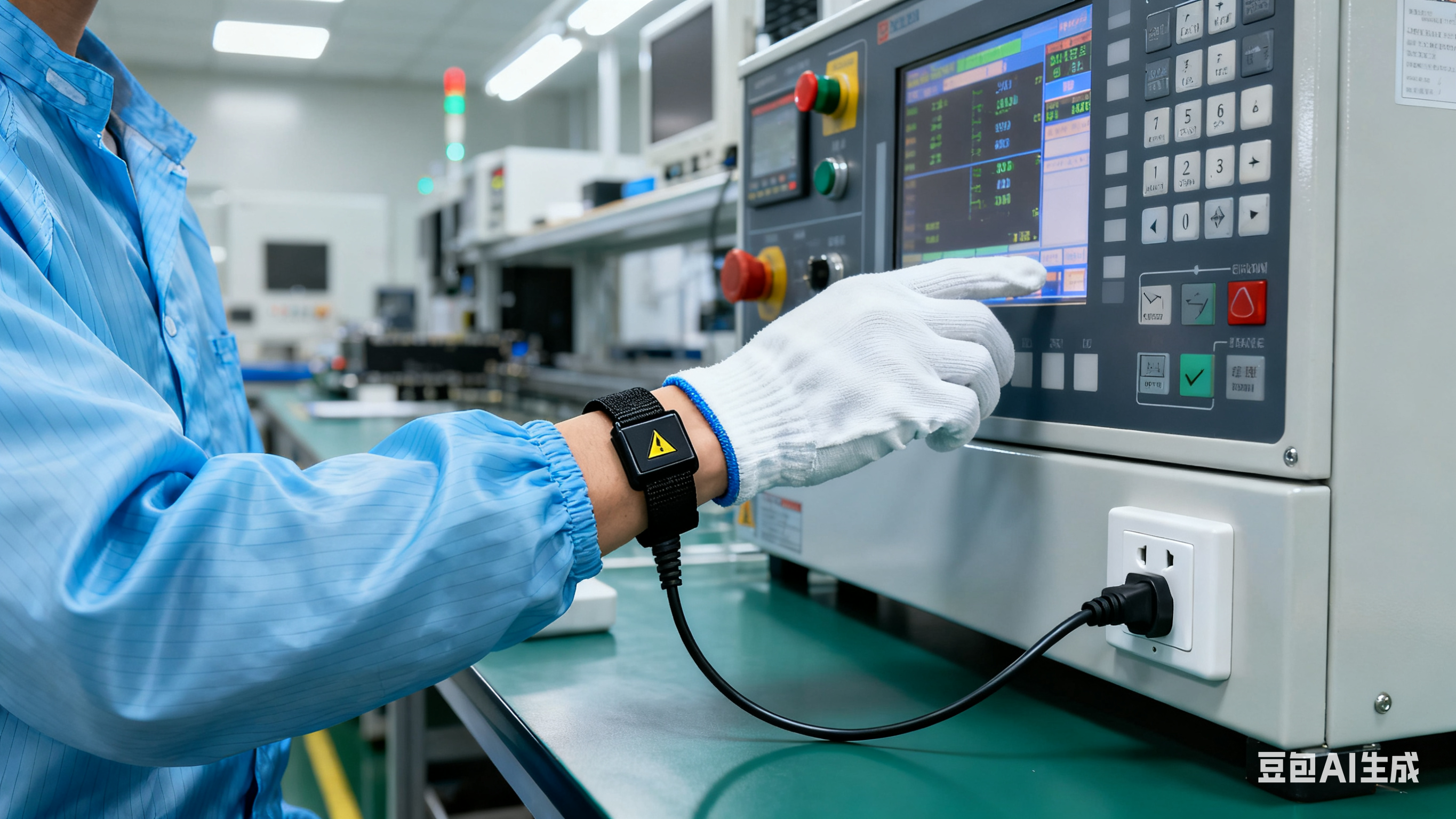
Grounding and bonding are fundamental methods for managing static electricity in manufacturing environments. Grounding ensures that any static charges are safely discharged into the earth, preventing dangerous buildups that could lead to ESD. Bonding, on the other hand, connects different parts of equipment, tools, and workstations together to equalize electrical potentials. This minimizes the risk of static charge buildup and ensures that any charge is safely dispersed. Both grounding and bonding are essential for protecting sensitive optoelectronic devices during production.
Ionizing equipment is widely used in optoelectronic manufacturing to neutralize static charges. Ion bars and ion blowers generate ions that attach to static charges, neutralizing them and preventing the buildup of harmful electricity. Ion bars are often placed near assembly lines and workstations where static is likely to accumulate, while ion blowers are used to eliminate static from components before they enter sensitive machinery. This technology is particularly effective in reducing the risk of ESD in environments handling precision devices like LEDs and photodetectors.
Using antistatic materials and equipment is crucial for maintaining a static-free environment. ESD-safe mats, work surfaces, packaging materials, and clothing prevent the buildup and transfer of static charges. ESD mats are placed on workbenches and floors to provide a safe surface for handling components, while antistatic clothing ensures that employees do not introduce static into the work environment. These materials help mitigate the risk of ESD and ensure the safety and integrity of optoelectronic devices during assembly and testing.
Maintaining optimal humidity levels in manufacturing environments plays a significant role in controlling static electricity. Dry conditions increase the likelihood of static buildup, as moisture in the air helps dissipate static charges. Keeping humidity levels above 60% in areas where static-sensitive components are handled can significantly reduce the risk of ESD. Humidifiers, ventilation systems, and climate control systems can help maintain the right balance, preventing static accumulation and ensuring a safer production environment.
| Method | Description | Application |
|---|---|---|
| Grounding and Bonding | Ensures static charges are safely dissipated and equalizes electrical potential | Used at workstations and equipment |
| Ionization Systems | Neutralizes static charges through ion bars and ion blowers | Applied to areas where static buildup occurs |
| ESD-Safe Materials | Antistatic mats, packaging, and clothing to prevent charge buildup | Essential in assembly and packaging areas |
| Humidity Control | Maintains optimal humidity levels to reduce static accumulation | Implemented in manufacturing environments |
Training programs are essential for educating employees about the risks of static electricity and the best practices for preventing it. Workers must understand how to handle sensitive components, wear appropriate protective equipment, and follow proper procedures to avoid introducing static into the production process. Regular training helps ensure that all personnel are aware of the importance of static control and are equipped with the knowledge to implement it effectively.
To ensure effective static electricity control, manufacturers must adhere to industry standards. Guidelines such as ANSI/ESD S20.20 and IEC 61340-5-1 outline the best practices for managing ESD in manufacturing environments. These standards provide specific recommendations for grounding, ionization, clothing, and other static control measures. Compliance with these standards not only ensures product safety and quality but also helps manufacturers meet regulatory requirements and avoid legal and financial penalties.
The automotive electronics industry relies heavily on static control measures to ensure the performance and reliability of electronic components, such as sensors and control units. In this sector, manufacturers use a combination of ionization systems, ESD-safe materials, and grounding techniques to minimize the risk of static damage, ensuring that every component meets rigorous quality standards.
In the pharmaceutical industry, static control is critical for preventing contamination in drug packaging and medical devices. For example, in facilities that produce plastic bottles for medicine, static buildup can cause dust and particles to adhere to the product, compromising its purity. Manufacturers use ionization fans and other ESD-safe materials to maintain a clean, static-free environment. This ensures that the integrity and safety of pharmaceutical products are preserved throughout the production process.
Semiconductor and PCB assembly lines are highly sensitive to static electricity. A single spark can destroy a microchip or other critical component. To mitigate this risk, companies use extensive static control measures, including grounding systems, ionization technology, and humidity control. These measures help protect the integrity of optoelectronic devices and prevent costly product failures.
To protect precision devices in optoelectronic manufacturing, effective static control measures are essential. Key practices include grounding and bonding systems, ionization technology, ESD-safe materials, and humidity control. As devices become smaller and more complex, static control in manufacturing becomes increasingly critical. Advances in ionization systems and humidity control are expected to provide more efficient solutions. GD Decent Industrial offers innovative products that help mitigate static risks, ensuring optimal performance in manufacturing environments.
A: Static electricity is an imbalance of electrical charges on materials. In manufacturing, it can cause damage to sensitive components like semiconductors and LEDs.
A: Static electricity can damage precision devices, leading to defects. Effective control methods like grounding, ionization, and humidity control are essential to protect components.
A: Ionization systems, like ion bars and blowers, neutralize static charges by emitting ions, preventing ESD damage in sensitive manufacturing environments.
A: ESD-safe materials, such as mats and clothing, prevent static buildup, ensuring that components are handled safely and minimizing the risk of electrostatic discharge.
A: Maintaining optimal humidity levels helps reduce static buildup. Humidity control above 60% is essential for creating a stable, static-free manufacturing environment.
