
Views: 0 Author: Site Editor Publish Time: 2025-12-10 Origin: Site


Air ionizers send out negative ions. These ions stick to dust and smoke. This makes the air cleaner and fresher.
Using an air ionizer can lower static electricity. This helps in places with sensitive electronics.
Air ionizers use less energy than many other appliances. This helps you save money and helps the environment.
Cleaning filters often helps your air ionizer work well. It also helps it last longer.
Pick air ionizers that make little ozone. This keeps you and your family safe.
You might ask how an air ionizer is different. An air ionizer is also called a negative ion generator. It uses high voltage to change air molecules. This makes negative ions, which are tiny bits with extra electrons. When you turn it on, the air ionizer sends these ions into the air. The ions stick to dust, pollen, and smoke. The particles get heavier and drop out of the air. This helps make the air in your room cleaner.
Tip: Negative ions can help stop static electricity. If you use electronics or work where static is a problem, an air ionizer can help keep things safe.
Air ionizers make negative ions by blowing air through a special part.
The device uses a corona discharge. This means high voltage between two parts sends ions into the air.
Unipolar ionizers only send out negative ions. These ions balance the positive charge from machines.
Bipolar ionizers send out both negative and positive ions. Most homes and factories only need negative ions.
You may have seen other air purifiers like HEPA filters or carbon filters. These filters catch dust and smells as air goes through them. But they do not stop static electricity. Air ionizers are special because they clean air and stop static. This is good in places where static can hurt electronics or make dust stick to things.
Think about working in an electronics factory. Static electricity can damage small parts. Many companies use air ionizers to protect their products. For example, the Ion Fan from GD Decent Industry Co., Ltd. helps remove static and dust from work areas. The fan works with ionizing bars and sensors to keep the area safe. This helps make better products and fewer problems with static. This shows air ionizers are important for clean air and static control.
You may wonder how an air ionizer works. It all starts with electricity. When you turn it on, the device uses high voltage. This makes a strong electric field inside. The field forms between two metal parts called electrodes. This process is called corona discharge. The air ionizer working principle depends on this discharge. It splits air molecules and sends out charged ions. Most of these ions are negative. They spread around your room as ionized air.
The voltage in air ionizers is very high. It can be from 1,500 to 30,000 volts. But the device does not use much power. You can see how little energy it needs compared to other things in your home:
Appliance | Average Wattage per Hour |
|---|---|
LED light bulb | 10 watts |
Air purifier | 50 watts |
Laptop computers | 100 watts |
LED television | 100 watts |
Ceiling fan | 120 watts |
Desktop computer | 200 watts |
Dehumidifier | 250 watts |
Vacuum cleaner | 800 watts |
Toaster | 850 watts |
Microwave | 1,000 watts |
Clothes iron | 1,000 watts |
Refrigerator | 1,200 watts |
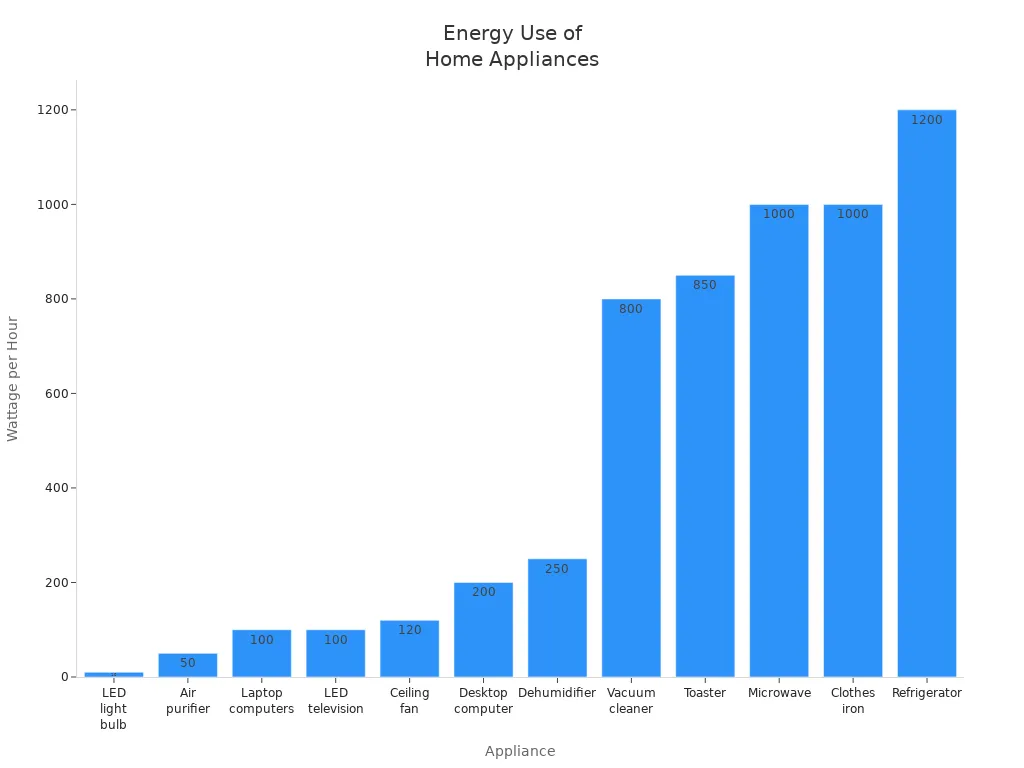
Air ionizers use less energy than most home appliances. This helps you save money and is better for the environment.
The ionization process starts when the air ionizer sends electricity through its electrodes. The strong electric field makes air molecules lose or gain electrons. This creates charged ions. Most air ionizers make negative ions. Some can make both positive and negative ions. These ions move into the air and mix with particles around you.
Here is a table that shows what scientists have learned about ionization:
Study | Findings |
|---|---|
Wang, 2011 | Coulombic force between charged particles and fibers helps air ions improve filtration. |
Lee et al., 2005 | Unipolar air ions from corona-ionizing purifiers protect against fine particles. |
Huang et al., 2008 | Ionization boosts HVAC filters for biological aerosols, including viruses. |
Park et al., 2011 | Carbon-fiber ionizers improve particle filtration in air filters. |
Kim et al., 2000 | Fibrous filters as ground electrodes enhance particle removal in electrostatic precipitators. |
Lee et al., 2011 | Two-stage electrostatic filters with positive corona prechargers work well. |
Inculet et al., 2002 | Pseudoelectret fibers create strong electric fields to attract charged particles. |
You can see that ionization helps remove dust, pollen, and germs from the air. New air ionizers use smart features and connect to HVAC systems. Some use special technology to lower ozone and keep your air safe.
After the air ionizer releases charged ions, these ions stick to particles in the air. The particles get a negative charge. You will notice these charged particles act differently. They stick to surfaces, join with other particles, and fall faster. This helps make your air cleaner.
Here is how the process works:
Negative ions go into the air.
These ions stick to dust, pollen, and smoke.
The particles get a negative charge.
Charged particles stick to positive surfaces or filters.
Small particles join together and settle quickly.
Mechanism | Description |
|---|---|
Ionization | Negative ions interact with airborne particles. |
Particle Charging | Particles become negatively charged. |
Attraction to Surfaces | Charged particles move to positively charged surfaces or filters. |
Agglomeration | Small particles join together, making them easier to remove. |
Settling | Charged particles settle faster, especially near the air ionizer. |
Air ionizers are good for removing odors and germs. HEPA filters catch more tiny particles, but using both gives you the best air.
In factories, you can see air ionizers like the Ion Fan from GD Decent Industry Co., Ltd. These devices help control static electricity and dust. The Ion Fan uses ionizing bars and sensors to keep work areas safe. This protects electronics and makes products better. You can use ionized air to stop static and keep your workspace clean.
Note: Air ionizers use less energy than most air purifiers. You save money and help the planet by picking energy-saving devices.
Now you know the air ionizer working principle. You see how an air ionizer works to clean air and control static. Charged ions are important for making your air safer and fresher.
When you shop for an air ionizer, you will see many kinds. Each kind works in its own way to clean air and stop static. The main kinds are unipolar ionizers and bipolar ionizers. Some machines use electrostatic plates to catch dust and other particles.
Type of Ionizer | Description | Example Units |
|---|---|---|
Negative Ionizers | Give off only negative ions, often used with filter purifiers. | IonPacific ionbox, Blue Pure 211+ |
Dual Polarity Ionizers | Give off both negative and positive ions, usually with filter units. | Winix 5500-2 Plasmawave |
Electrostatic Precipitators (ESPs) | Use charged plates to grab particles instead of filters. | Ionic Pro 90IP01TA01W Turbo Ionic Air Purifier |
Unipolar ionizers are also called negative ionizers. They send only negative ions into the air. You can find these in many home air purifiers. The device uses electricity to add extra electrons to air molecules. These negative ions stick to dust, pollen, and smoke. The particles get heavy and drop out of the air. This helps you breathe cleaner air and lowers static.
Negative ionizers work well in rooms with lots of dust or static.
You can use them in bedrooms, offices, or places with electronics.
Tip: If you have allergies or want to keep devices safe, a unipolar ionizer can help.
Bipolar ionizers are also called dual polarity ionizers. They send out both negative and positive ions. This makes cleaning faster and better. The ions stick to tiny particles in the air. The particles join together and fall down quickly. You often see bipolar ionizers in big air cleaning systems or factories.
Dual polarity ionizers help clean air in large spaces.
They control static and remove small particles from the air.
You can pick the best air ionizer for your needs. Both types use ionization to make your air cleaner and safer.
You want clean air at home or work. Air ionizers help by sending out ions. These ions stick to dust, pollen, and smoke. The particles get heavier and fall down. This makes the air cleaner. You will notice the air feels fresher after using an air ionizer. Studies show air ionizers make more particles stick to walls. They also help particles leave the air faster, by 10 to 30%. Look at the table below for more facts:
Study Focus | Findings | Conditions |
|---|---|---|
Effect of Ionizers on Indoor Air Quality | Unipolar ions make more particles stick to walls; particles leave air 10 to 30% faster with ions | No ventilation, HVAC system, indoor air cleaners |
You will also see less dust and fewer allergens. One test showed a child’s room had half as much dust. Another study found PM levels dropped by 69% to 80%. Sometimes, PM10 dropped by 90% and PM2.5 by 80%. These results show air ionizers can really help clean the air.
You want to stay healthy and safe. Air ionizers help your lungs and are good for people with asthma or allergies. Cleaner air means you breathe easier. Some people even do better in sports because their lungs get more oxygen. Athletes sometimes use air ionizers after working out. Negative ions and salt particles can help lower swelling.
Air ionizers help remove allergens and help people with asthma.
Cleaner air can help you do better in sports.
Negative ions may help you recover after exercise.
But you should know some air ionizers make ozone. Ozone can make you cough or hurt your chest. Breathing ozone for a long time can hurt your lungs or cause asthma attacks. Always pick air ionizers that make very little ozone to stay safe.
Factories and labs need to control static. Air ionizers are important in electronics, clean rooms, and packaging. They stop static charges on things like plastic and glass. This helps stop electrostatic discharge, which can break circuits. It also stops static from making products dirty. You will see fewer broken parts and better products.
Application Area | Effectiveness of Air Ionizers |
|---|---|
Electronics Manufacturing | Stops static charges on plastic and other materials |
Clean Rooms | Needed to stop ESD damage |
Medical Device Manufacturing | Helps keep the area controlled |
Circuit Board Manufacturing | Stops dirt and ESD damage |
Packaging Areas | Keeps ESD-sensitive places safe |
You can have up to 90% fewer static problems and clean better. Air ionizers help you keep your workplace safe and your products high quality.
You need to use your air ionizer safely. Some air ionizers can make ozone gas. Breathing too much ozone is not good for you. It can make you cough or your mouth feel dry. Your eyes or chest might feel sore. Here is a table that shows safe ozone levels:
Agency | Exposure Limit | Notes |
|---|---|---|
OSHA | 0.1 ppm over 8 hours | This is the average safe amount for a workday. |
NIOSH | 0.1 ppm (0.2 mg/m3) | This is the recommended limit. Five ppm or more is very dangerous. |
FDA | 0.05 ppm | This is the limit for medical devices used inside. |
Tip: If you feel sore or have trouble breathing, go outside. Get help if you still feel bad.
Put your air ionizer in a good spot. Keep it away from walls and furniture. Place it about three feet above the floor. Do not block the airflow with things. Big rooms need stronger ionizers. Do not put it in busy places so air can move well.
Check for safety certifications when you buy an air ionizer. These show the device is safe and works well. Look for these standards:
Certification Standard | Description |
|---|---|
UL 867 | This means the air cleaner is safe and works right. |
UL 2998 | This means the device does not make ozone. It is better for your health. |
Always read and follow the instructions from the maker.
You can help your air ionizer work better by doing simple things:
Clean the pre-filter often so it does not get blocked.
Change HEPA filters every 12 to 24 months.
Change carbon filters every 6 to 12 months.
Wipe the outside and vents to get rid of dust.
Check the humidity before you use your ionizer. If it is too wet, the ionizer may not work well. Use a dehumidifier if you need to.
Run your air ionizer all day for the best air.
Turn up the fan speed when allergy season starts.
Taking care of your air ionizer helps it last longer and keeps your air clean.
You can see that air ionizers send out charged ions. These ions stick to dust and other particles in the air. This helps get rid of dust, bacteria, and mold. Your room becomes cleaner and safer. Air ionizers also help stop static in factories. They protect electronics from damage. When picking an air ionizer, think about what you need. Look at how it works in your space. Think about the features you want and how much you can spend. Try trusted brands like GD Decent Industry Co., Ltd. Always use safety tips for the best results.
You should clean your air ionizer every two to four weeks. Dust and particles can build up on the device. Regular cleaning helps your ionizer work better and keeps your air fresh.
Yes, you can use an air ionizer if you have pets. The device helps remove pet dander and odors from the air. Your home will feel cleaner, and you may notice less sneezing or allergies.
Ionizers use charged ions to remove particles and control static. Air cleaners, like HEPA filters, trap dust and allergens as air passes through. You may choose an ionizer for static control or an air cleaner for strong filtration.
Air ionizers can help reduce allergens in your home. They remove dust, pollen, and pet dander from the air. You may breathe easier and have fewer allergy symptoms when you use an ionizer.
Air ionizers are safe for children when you use them correctly. Choose models with low ozone output. Always follow the instructions from the manufacturer to keep your family safe.
