
Views: 0 Author: Site Editor Publish Time: 2026-03-13 Origin: Site


Static electricity causes dust, defects, and production issues. Many factories struggle to control static adsorption. Static Elimination becomes essential for stable manufacturing.In this article, we explore causes, risks, and practical static Elimination methods used in modern industries.
In many industrial environments, static electricity forms when two materials contact and then separate. We often see it during friction, sliding, or rolling processes. This phenomenon is called the triboelectric effect, where electrons transfer from one surface to another. When electrons move, one material gains extra electrons while the other loses them. This imbalance creates an electrostatic field, which later attracts dust, particles, and fibers.
Several conditions usually accelerate static charge generation:
● Material friction during movement
When surfaces slide across rollers or guides, friction causes electron transfer. The faster the movement, the stronger the electrostatic field becomes.
● Repeated contact and separation
Production lines often involve continuous material separation. Each separation event adds more charge to the material surface.
● Use of insulating materials
Plastics and synthetic polymers store static charges easily. Without proper static elimination, the charge remains on the surface and attracts contaminants.
Understanding how the triboelectric effect works helps engineers identify the points where static electricity first appears in production lines.
Static electricity often appears in industrial processes where materials move quickly or repeatedly interact with machinery. These processes create friction, separation, or fluid movement, which naturally generates electrostatic charges. As production speed increases, the charge level rises, making static elimination systems essential for stable operation.
Typical operations that generate static electricity include:
● Conveyor material transport
Products sliding across conveyor belts continuously rub against rollers and surfaces. Over time, this friction produces noticeable electrostatic buildup.
● Film and sheet processing
Plastic films and paper layers separate rapidly during unwinding or cutting. Each separation produces additional static charge.
● Coating and spraying operations
Charged particles may accumulate on equipment surfaces. This can disturb coating uniformity or attract dust contamination.
● Powder and liquid filling systems
When powders or liquids flow through pipes or nozzles, friction between the material and pipe walls generates static electricity.
The following table summarizes several common industrial operations and their static generation characteristics.
Industrial Operation | Static Source | Typical Problem |
Conveyor transport | Friction between materials and rollers | Material sticking or misalignment |
Film unwinding | Layer separation and high speed movement | Dust adsorption on film surfaces |
Powder filling | Particle flow through pipes | Electrostatic dust attraction |
Printing processes | Paper sheet separation | Print defects and feeding errors |
These processes show why static electricity is so common in manufacturing. Without proper static elimination, electrostatic charges can attract dust, affect product quality, and interrupt automated production systems.
In many factories, static electricity creates invisible electrostatic fields around materials. Dust, fibers, and tiny debris float in the air. When they pass near a charged surface, they are pulled toward it and stick to it. This effect is called static adsorption, and it often leads to serious quality issues in manufacturing.
Materials such as plastic films, rubber parts, and synthetic textiles easily hold electrical charges. Once static forms, particles attach to the surface and remain there during the next production step. In industries such as electronics, optics, and coating processes, even microscopic dust can damage product quality.
Common contamination situations include:
● Plastic film production
Dust sticks to the film surface during winding or cutting. These particles later appear as visible defects or surface marks.
● Precision components
Optical lenses and electronic boards attract tiny fibers. They interfere with assembly accuracy and product performance.
● Coating and painting processes
Charged surfaces pull airborne debris before coatings dry. The particles become trapped in the finish layer.
Charged Surface | Contaminant | Resulting Problem |
Plastic film | Dust and fibers | Surface defects |
Optical lenses | Micro particles | Reduced clarity |
Circuit boards | Dust and lint | Assembly issues |
Painted surfaces | Airborne debris | Coating imperfections |
Because of these risks, many production lines install static elimination systems to neutralize charges before contamination occurs.
Electrostatic discharge happens when a charged object suddenly releases electricity to another object. The event may appear as a tiny spark, or it may occur invisibly. Even small discharges can damage delicate electronics.
Electronic components contain extremely small circuits. When static electricity flows through them, the energy can destroy conductive pathways inside the device. Once this happens, the component may fail immediately or become unreliable later.
Situations where ESD commonly appears include:
● Workers touching sensitive electronic parts after walking across floors
● Tools carrying static charge contacting circuit boards
● Charged materials moving close to electronic sensors or chips
Industries such as semiconductor manufacturing, PCB assembly, and medical electronics depend heavily on static elimination technologies. Ionizing equipment neutralizes surface charges before they reach sensitive devices.
Static electricity also disrupts normal production flow. When materials carry electrical charge, they begin interacting with nearby surfaces or with each other. This causes sticking, misalignment, and unstable movement during automated processes.
Production lines moving plastic films, paper sheets, or textile fibers often experience these problems. As material speed increases, friction increases too. This leads to stronger electrostatic buildup.
Typical production issues include:
● Film sticking to rollers
Charged plastic films cling to machine parts. The film wraps around rollers and stops the line.
● Paper feeding problems in printing
Static forces cause sheets to stick together. Printing machines cannot separate them correctly.
● Material drift on conveyor belts
Electrostatic attraction pulls materials off their normal path. Products shift or tilt during transport.
To avoid these issues, factories often place static elimination equipment near conveyors and processing points where static forms most easily.
Static electricity can also create dangerous sparks in industrial environments. When two objects carry different electrical potentials, the charge may suddenly discharge between them. This release of energy forms a spark.
In locations where flammable vapors, dust, or chemicals are present, even a small spark can ignite the surrounding atmosphere. This risk is especially high in industries handling fuels, powders, or volatile substances.
Dangerous situations may occur during:
● Liquid transfer and fuel loading operations
● Powder processing and grain handling
● Chemical mixing or storage processes
Grounding and bonding are among the most fundamental methods used for static elimination in industrial environments. Static electricity forms when charges accumulate on equipment, containers, or materials. If there is no conductive path for these charges to escape, they remain on the surface and may eventually discharge as a spark. By connecting equipment to a grounding point, excess electrons can safely flow into the earth and reduce the voltage difference between objects.
In practice, grounding systems link conductive equipment directly to earth through cables, clamps, or metal connectors. Bonding works in a similar way. Instead of connecting an object to earth, bonding connects two conductive objects together so they share the same electrical potential. When both objects hold the same charge level, electrical discharge between them cannot occur.
Typical grounding and bonding applications include:
● Liquid transfer equipment
Pipes, tanks, and hoses can accumulate static during fluid movement. Grounding cables help release the charge continuously.
● Metal containers and drums
Paint coatings or surface oxidation may reduce conductivity. Specialized grounding clamps pierce the coating to ensure metal-to-metal contact.
● Industrial machinery frames
Large machines often include grounding points to dissipate static generated during operation.
Static Control Method | Main Purpose | Typical Application |
Grounding | Direct charge flow to earth | Tanks, pipelines, machines |
Bonding | Equalize charge between objects | Containers and transfer systems |
Grounding clamps | Maintain conductive contact | Drums, painted metal surfaces |
Proper installation of grounding paths greatly reduces the buildup of electrostatic charge and helps maintain safer industrial environments.
Environmental conditions strongly influence how quickly static electricity accumulates. Dry air allows electrical charges to remain on surfaces for longer periods. Moist air, however, provides a thin conductive layer on material surfaces. This layer allows charges to dissipate slowly into the surrounding environment. Because of this effect, increasing humidity can support static elimination in certain production areas.
Manufacturing facilities sometimes install industrial humidifiers to stabilize air moisture levels. When humidity rises above moderate levels, static charges dissipate faster. Dust particles also lose some of their electrostatic attraction to charged surfaces.
Environmental strategies often include:
● Humidity regulation systems
Industrial humidifiers raise moisture levels in large production halls. This reduces static accumulation on insulating materials.
● Climate control monitoring
Sensors track humidity and temperature continuously. Stable environmental conditions reduce electrostatic fluctuations.
● Material storage management
Packaging materials stored in extremely dry conditions generate higher static charges during processing.
Humidity control alone cannot eliminate static completely. However, it significantly reduces electrostatic buildup and supports other static elimination technologies used in production lines.
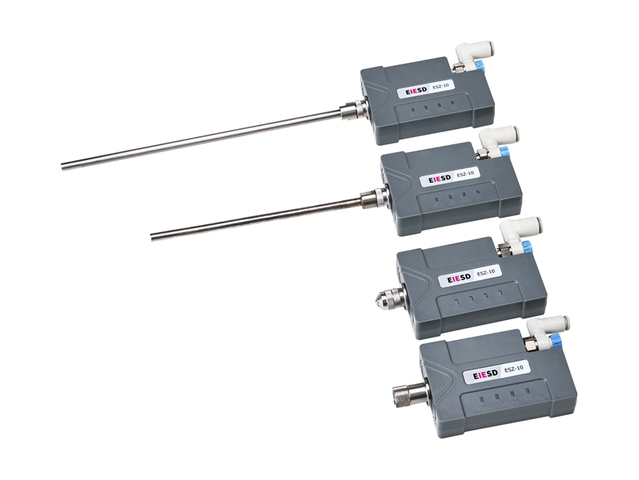
Modern factories often rely on active ionization systems for reliable static elimination. These systems use high-voltage power supplies to generate balanced streams of positive and negative ions. The ions travel through the air and attach to charged surfaces. When the ions reach the material, they neutralize the excess electrical charge and restore electrical balance.
Ionization devices are widely installed along production lines. They neutralize charges immediately after static generation occurs. This prevents dust attraction, material sticking, and electrostatic discharge.
Common ionization equipment used for static elimination includes:
● Ionizing bars
Long devices mounted above conveyors or rollers. They release ions along the length of moving materials.
● Ionizing fans or blowers
Equipment designed to distribute ionized airflow across workstations. They protect electronic components from electrostatic discharge.
● Ion air nozzles
Precision tools used for localized static removal and surface cleaning.
Ionization technology works effectively in automated production environments where materials move continuously and static charges regenerate rapidly.
Passive static control solutions help reduce electrostatic buildup without external power. Instead of generating ions, these materials allow charges to dissipate slowly across conductive or dissipative surfaces. They often complement active static elimination systems by reducing the overall amount of charge produced during processing.
Many industrial facilities integrate passive static control materials directly into the workspace. These materials help manage electrostatic behavior of equipment, flooring, and operator clothing.
Examples of passive static control tools include:
● Antistatic floor mats
Conductive surfaces placed in workstations. They allow charges from personnel or equipment to dissipate safely.
● Dissipative packaging materials
Used to protect sensitive electronic components during storage and transport.
● Antistatic clothing and footwear
Designed to reduce static buildup generated by human movement in manufacturing areas.
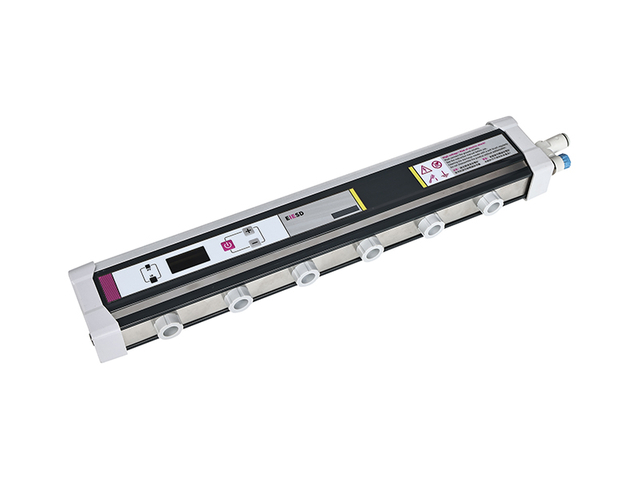
Ionizing bars are one of the most common tools used for static elimination in industrial production lines. They are usually installed above conveyor belts, rollers, or web handling equipment. The bar generates balanced positive and negative ions. These ions move toward the charged material surface and neutralize the electrical charge.
This type of equipment works well for moving materials such as plastic film, paper sheets, and packaging products. During unwinding or cutting processes, friction creates strong static charges. When the ionizing bar releases ions close to the material surface, the electrostatic field weakens and dust adsorption is reduced.
Typical uses include:
● Film and plastic sheet production lines where materials move at high speed. Ionizing bars stabilize the material surface and reduce contamination.
● Printing and paper processing systems where sheets separate quickly. Static elimination prevents feeding errors and sheet sticking.
● Packaging equipment handling lightweight materials that easily carry electrostatic charges.
Ion fans and ion blowers provide wide-area static elimination in production environments. Instead of focusing on one narrow point, they distribute ionized airflow across a workstation or assembly area. The airflow carries both positive and negative ions. These ions neutralize static charges on nearby surfaces.
They are often used in electronics assembly and precision manufacturing. Electronic components are extremely sensitive to electrostatic discharge. Even a small charge difference can damage circuits. Ion fans reduce this risk by maintaining a balanced electrostatic environment around operators and equipment.
Common situations where ion fans are used include:
● PCB assembly stations where workers handle circuit boards directly.
● Semiconductor production areas where electrostatic control must remain stable.
● Testing and inspection tables used for electronic components.
Some production processes require very precise static control. Ion nozzles and ion air guns are designed for localized static elimination. They combine compressed air and ionization technology to deliver a focused stream of ionized air.
The airflow neutralizes electrostatic charge and removes particles at the same time. This makes the equipment useful for cleaning sensitive surfaces before assembly. Because the airflow is concentrated, it can reach small or complex areas inside machinery.
Typical applications include:
● Cleaning electronic components before installation.
● Removing static charge from molded plastic parts.
● Eliminating dust from precision optical equipment.
Electrostatic sensors help engineers monitor static levels in industrial environments. Instead of removing static directly, they measure the electrostatic field around objects. These measurements show where charge buildup occurs and how strong it becomes during production.
Sensors operate without touching the material. They detect voltage differences generated by static electricity. When charge levels rise, operators can activate additional static elimination equipment or adjust the production process.
Equipment | Primary Function | Typical Application |
Ionizing Bar | Neutralizes charge on moving materials | Film and packaging lines |
Ion Fan / Blower | Distributes ionized air across workspace | Electronics assembly |
Ion Nozzle / Air Gun | Precision static removal and cleaning | Small components |
Electrostatic Sensor | Measures electrostatic field levels | Process monitoring |
Static electricity often causes dust adsorption and production problems. Effective static elimination improves product quality and process stability. GD Decent provides reliable static elimination equipment, including ionizing bars, ion fans, and monitoring sensors. Their solutions help factories reduce contamination, protect electronics, and maintain safer industrial environments.
A: Static electricity adsorption occurs when charged surfaces attract dust or fibers. Static elimination helps neutralize the charge and reduce contamination.
A: Static elimination releases ions to balance surface charges. It reduces Static Electricity Adsorption and keeps materials clean.
A: Static Electricity Adsorption may lead to electrostatic discharge. Static elimination protects circuits and sensitive components.
A: Ionizing bars, ion fans, and ion nozzles perform static elimination. They neutralize charges on moving materials.
A: Factories combine grounding, monitoring, and static elimination equipment. This reduces dust attraction and production defects.
