
Views: 0 Author: Site Editor Publish Time: 2026-03-13 Origin: Site


Dust sticking to products during production? Static electricity often causes it.Static Elimination helps control charges in manufacturing environments.In this article, you will learn causes, risks, and practical static Elimination solutions used in modern industry.
Static electricity appears during many manufacturing processes. Materials move quickly. They touch, slide, and separate. During this movement electrons shift between surfaces. One surface becomes positively charged. The other becomes negatively charged. This imbalance forms static electricity and it remains on the material surface until neutralized.
In most industrial environments, the main cause is not simple friction. It is actually contact and separation of materials. When two materials press together their surface electrons change balance. Once they separate rapidly, electrons cannot easily return. One surface then holds excess electrons. The other surface loses them. This difference creates a static field that may remain on the material for a long time.
Several common production activities generate static electricity:
● Material contact and separation
Film rolls peel from surfaces. Packaging materials separate during cutting. Conveyor belts release products. These actions disturb surface electrons and create electrostatic charges.
● Friction between insulating surfaces
Plastics, rubber, and synthetic materials are poor conductors. Charges cannot easily escape. When these materials rub together, static charges accumulate quickly and remain trapped on the surface.
● Electron transfer through the triboelectric effect
Different materials exchange electrons when they interact. Some materials tend to gain electrons easily. Others lose them. This process forms positive and negative ions on surfaces.
● High-speed automated production
Faster production increases contact frequency. Materials move across rollers, pipes, or guides repeatedly. Static electricity therefore builds up more rapidly.
The following table shows several industrial processes that commonly generate static electricity.
Industrial Process | Main Static Source | Typical Materials |
Plastic film converting | Film peeling and rolling friction | PET, PE, PVC |
Printing and coating | Material movement across rollers | Paper, plastic sheets |
Electronic assembly | Component handling and conveyor transport | Circuit boards, chips |
Packaging operations | Material separation and cutting | Labels, cartons, films |
In such environments, static charges can remain on products or equipment surfaces. Without proper static elimination systems, this charge continues to accumulate and begins to interfere with production.
Static electricity does more than create an electrical imbalance. It produces an electric field around charged surfaces. This field interacts with surrounding particles in the air. Dus, fibers, and microscopic contaminants respond to this field and move toward the charged material.
In manufacturing plants this phenomenon leads to several visible problems:
● Dust accumulation on product surfaces
Plastic films and electronic components often attract airborne particles. Even in relatively clean rooms, static charges can draw contaminants toward the material.
● Material sticking during processing
Oppositely charged materials may adhere to each other. Sheets of film or paper may stick together during feeding operations.
● Uneven coating or printing results
Static charges can repel paint or ink. Instead of spreading evenly, coating materials may form irregular patterns.
These electrostatic interactions can slow production and reduce product quality. Dust contamination also increases rejection rates and equipment maintenance requirements.
Environmental conditions further influence static adsorption:
● Low humidity allows static charges to remain longer
● Insulating materials prevent charge dissipation
● Rapid mechanical movement increases charge generation
Because of these factors, static electricity adsorption becomes common in industries such as printing, packaging, plastic processing, and electronics assembly. To control this issue, manufacturers often apply static elimination solutions such as ionizers, grounding systems, or electrostatic monitoring devices.
By managing the charge level on materials and equipment, production environments can significantly reduce dust attraction and contamination.
Dust contamination is one of the most common problems caused by static electricity adsorption. Charged surfaces create an electrostatic field around them. Airborne particles respond to this field immediately. They move toward the charged surface and remain attached to it.
In industries using plastics or films, the problem becomes more visible. These materials easily hold static charges. As a result, dust and fibers from the surrounding environment accumulate on the product surface.
Common contamination situations include:
● Plastic films attracting airborne particles
Film materials used in packaging or printing often carry strong charges during winding and unwinding processes. These charges pull dust toward the film surface. Once attached, particles may remain embedded in the material and affect product appearance.
● Electronic components collecting microscopic debris
Static electricity pulls tiny particles toward circuit boards and components. Even small contaminants may cause short circuits or reduce the reliability of sensitive electronics.
● Surface defects during painting or coating processes
Charged surfaces repel or attract coating particles unevenly. This leads to uneven paint distribution, small bubbles, or rough textures on finished products.
Manufacturing plants often monitor contamination risks carefully. The following table illustrates how static electricity influences product quality.
Manufacturing Process | Static Effect | Quality Problem |
Plastic film production | Charged film attracts dust | Surface contamination |
Electronics assembly | Electrostatic particle attraction | Circuit reliability issues |
Printing and coating | Electrostatic field disrupts coating | Uneven paint or ink layers |
Packaging operations | Dust accumulation on materials | Visible product defects |
To prevent these issues, many factories install ionization equipment. For example, GD Decent static elimination devices generate balanced ions in the surrounding air. These ions neutralize charges on material surfaces and help keep products cleaner during production.
Electrostatic discharge, often called ESD, is another major risk in manufacturing. It occurs when two objects carrying different electrical potentials suddenly equalize their charges. The discharge appears as a spark. In industrial environments, the energy released during this event may damage sensitive equipment.
Electronic manufacturing is especially vulnerable. Semiconductor devices and integrated circuits operate at extremely small voltage levels. Even a small electrostatic discharge can destroy them.
Several situations increase ESD risk:
● Handling of electronic components
Workers or tools may carry static charges generated during movement. When they touch a component, the charge quickly transfers to the device. This can damage delicate circuits instantly.
● Conveyor transport of circuit boards
Boards move rapidly along automated lines. Friction between surfaces generates electrostatic charges. When boards contact grounded metal parts, a discharge may occur.
● Assembly environments using dry air conditions
Dry air prevents charges from dissipating naturally. As a result, static buildup becomes stronger and discharge events become more frequent.
Factories therefore rely on monitoring systems and ionization devices to reduce electrostatic potential. Many static elimination solutions, including electrostatic sensors and ionizing equipment, help detect and neutralize charge before it reaches harmful levels.
Static electricity also disrupts the physical movement of materials during production. Materials may suddenly stick together or repel each other. Automated equipment depends on predictable material flow. Static charges interfere with this process.
Typical production issues include:
● Materials sticking together during feeding operations
Opposite charges attract each other. Sheets of film, paper, or plastic may cling together. Machines then feed multiple layers instead of one.
● Repulsion between similarly charged materials
When surfaces carry the same charge polarity, they push each other away. This causes instability in automated transport systems.
● Misalignment in high-speed production lines
Charged materials may shift position while moving across rollers. Misalignment can interrupt printing, cutting, or labeling operations.
These issues often reduce production speed. Machines stop more frequently for adjustments. Operators must remove defective materials or reset equipment.
Common efficiency impacts include:
● Increased downtime due to machine interruptions
● Higher product rejection rates
● Slower line speeds during sensitive processes
To address these challenges, manufacturers often deploy static elimination equipment directly along production lines. Ionizing bars, air ionizers, and electrostatic sensors help stabilize material movement by neutralizing charges during operation.
Static electricity can also create serious safety hazards. When electrostatic potential becomes high enough, it may produce a spark. If flammable materials are present, this spark can ignite them. Industrial safety studies show sparks from static discharge are capable of triggering fires or explosions in certain environments.
Several hazardous conditions may arise:
● Ignition of flammable gases or vapors
Chemical processing facilities often contain volatile substances. A single electrostatic spark can ignite these vapors and start a fire.
● Dust explosions in powder handling industries
Facilities processing flour, chemicals, or metal powders face explosion risks. Fine particles suspended in air can ignite when exposed to static discharge.
● Electric shocks affecting workers
Workers may accumulate charge while walking or handling materials. When they touch equipment, the sudden discharge produces a shock.
Industrial environments therefore treat static electricity as both a production problem and a safety risk. Grounding systems, bonding methods, humidity control, and ionization devices are commonly used to reduce static accumulation.
Many factories integrate static elimination solutions throughout their production lines. Equipment neutralizes charges continuously, helping maintain safer working conditions while protecting both workers and equipment.
Ionization is one of the most effective methods for static elimination in modern factories. It works by producing balanced streams of positive and negative ions. These ions move through the air toward charged surfaces. Once they reach the material, they neutralize the electrical imbalance and restore charge stability.
Industrial ionization systems usually include several types of equipment:
● Ionizing bars
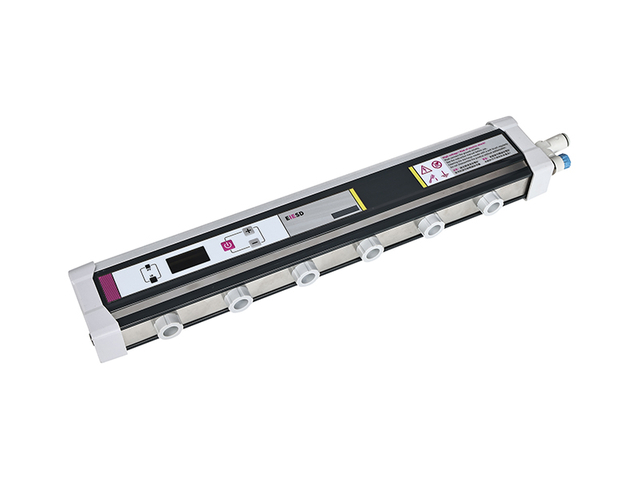
They install above production lines. They continuously release ions across wide surfaces. Film processing, printing, and packaging industries often use them.
● Ion fans
These devices combine airflow and ion generation. Air movement spreads ions across workstations. Electronics assembly areas frequently rely on them.
● Ion nozzles
They deliver focused ionized air. Operators use them when precise static removal is required during cleaning or component handling.
Manufacturers often integrate several devices together. Companies such as GD Decent design ionization equipment specifically for industrial environments. Their systems release stable ion streams and help maintain consistent static elimination across automated production lines.
Another important method for static control is grounding and bonding. This approach focuses on providing a safe path for electrons to move away from equipment. Instead of letting charges accumulate, the system directs them toward the earth.
Two related practices are commonly used in industrial environments:
● Grounding (earthing)
Equipment connects directly to the earth through wires or conductive rods. This connection allows charges to flow away from machines or containers.
● Bonding
Two conductive objects connect together using cables or clamps. They share the same electrical potential, preventing sparks between them.
The effectiveness of these systems depends on electrical resistance. A lower resistance path allows electrons to move freely. Industrial grounding systems often aim for very low resistance levels so static charges dissipate quickly.
Static Control Method | Primary Function | Typical Industrial Use |
Grounding | Directs excess electrons into the earth | Tanks, pipelines, machinery |
Bonding | Equalizes charge between objects | Containers, transfer systems |
Ionization | Neutralizes charge using ions | Production lines, workstations |
Grounding systems are especially important when handling flammable liquids or powders. In such environments, eliminating potential spark sources becomes critical for safety.
Environmental conditions strongly influence static electricity levels. Dry air allows charges to remain on surfaces longer. Moisture in the air improves electrical conductivity, allowing charges to dissipate naturally.
Many industrial facilities therefore use environmental control methods to support static elimination strategies. These methods do not replace ionization systems. Instead, they help reduce the overall rate of charge accumulation.
Common environmental approaches include:
● Humidity control
Increasing relative humidity allows moisture to form thin conductive layers on surfaces. These layers help electrons move away from charged objects.
● Antistatic additives
Manufacturers sometimes add conductive particles or surfactants to materials. These additives improve electrical conductivity and reduce static buildup.
● Conductive coatings
Certain coatings provide a pathway for electrons to travel across surfaces. This reduces the ability of insulating materials to hold static charges.
● Production process design
Adjusting material speeds, reducing friction points, or improving equipment alignment can lower static generation during operation.
These environmental strategies often work best when combined with active static elimination systems such as ionizers and electrostatic monitoring devices. Many modern factories integrate several control methods together so static charges remain within safe levels throughout the entire production process.
Static electricity often attracts dust and disrupts production. Static elimination technologies help control charges and improve manufacturing stability. GD Decent provides reliable static elimination equipment that neutralizes charges, protects sensitive components, and supports safer, cleaner industrial environments.
A: Static elimination neutralizes electric charges that cause Static Electricity Adsorption on materials during industrial processes.
A: Static Electricity Adsorption occurs when friction transfers electrons between materials, creating charged surfaces.
A: Static elimination devices release ions that neutralize charges and reduce Static Electricity Adsorption.
A: Electronics, printing, plastics, and packaging industries rely on static elimination to control Static Electricity Adsorption.
A: Yes. Static elimination reduces Static Electricity Adsorption and helps prevent dust contamination.
