
Views: 0 Author: Site Editor Publish Time: 2026-03-13 Origin: Site


Ever felt a sudden spark on a factory floor? Static can reach thousands of volts. It damages electronics and disrupts production.
In this article, we explain why static forms in manufacturing. We also show practical ways to Prevent Static Shock.You will learn key causes, risks, and modern static elimination technology used in factories.
Static shock in factories usually begins during normal production movement. Materials touch, slide, and separate while machines run continuously. During these interactions, electrons transfer between surfaces. One object gains electrons and becomes negatively charged. The other loses electrons and becomes positively charged. When the imbalance becomes large enough, the charge suddenly discharges through equipment or workers. This is the moment when people feel a spark. Understanding these causes is essential if companies want to Prevent Static Shock in manufacturing environments.
Static electricity forms whenever materials interact physically. Industrial processes often involve constant motion, friction, and separation. These conditions allow charges to accumulate quickly, especially when non-conductive materials are involved.
Several mechanisms are responsible for most static buildup:
● Contact and separation of materials
Materials frequently touch rollers, molds, or conveyors. When they separate, electrons redistribute unevenly. One surface holds excess electrons while the other loses them. Repeated separation increases the charge level.
● Friction between insulating materials
Plastics, films, and rubber surfaces generate static easily when sliding across machinery. Because they are poor conductors, the charge remains on the surface instead of dissipating quickly.
● Electron transfer through the triboelectric effect
Different materials naturally exchange electrons when they contact each other. Plastics interacting with metal rollers or guides often produce strong electrostatic charges.
● High production speed
Faster production lines create more contact cycles each second. This increases friction and separation events, which allows static voltage to rise rapidly.When these conditions combine, static charges may reach thousands of volts. Without proper elimination technology, the risk of electrostatic discharge becomes much higher.
Many industrial operations naturally produce static electricity because they involve fast material movement or fluid flow. These operations are common across packaging, electronics, plastics, and chemical production lines.
Typical examples include:
● Liquid filling and mixing
Fluids moving through pipes generate charge through friction. Non-conductive pipes allow static electricity to remain on the pipe surface.
● Spraying and coating processes
Paint or powder spraying often involves charged particles. If grounding or control systems are insufficient, static buildup may increase rapidly.
● Conveyor transport of materials
Plastic films, trays, or electronic parts move across belts and rollers. Friction during transport produces electrostatic charges on the product surface.
● Packaging and labeling operations
Thin plastic films separate quickly from liners or rollers. Rapid peeling generates strong static charges that attract dust and cause material sticking.
Manufacturing Operation | Static Generation Source | Potential Effects |
Liquid filling | Flow friction in pipes | Spark discharge risk |
Spray coating | Charged particles in spray | Uneven coating or ignition risk |
Conveyor transport | Belt friction with products | Dust attraction and shocks |
Packaging lines | Film separation from rollers | Material sticking and static buildup |
Because these processes often occur at the same time in automated factories, static charges can accumulate across multiple stages of production. Without monitoring and elimination systems, this buildup may eventually lead to electrostatic discharge events that affect workers, equipment, or product quality.
Before advanced ionization equipment became common, manufacturers relied on basic electrical safety practices to control static electricity. These traditional approaches focus on guiding electrical charges away from equipment and reducing conditions that allow static to accumulate. They remain widely used today because they are simple, reliable, and cost-effective ways to Prevent Static Shock in many production environments.
In most factories, several methods are combined rather than used alone. Grounding systems remove accumulated charge, bonding keeps metal objects at the same electrical potential, and environmental adjustments reduce the likelihood of static buildup. Protective materials and workplace design further help control static generated by workers and moving materials.
Grounding is the most fundamental method used to control static electricity in industrial environments. The idea is straightforward. Electrical charges need a safe path to dissipate. Grounding connects equipment directly to the earth through conductive cables or rods. Once connected, accumulated charge flows gradually into the ground instead of building up and releasing suddenly.
Manufacturing facilities commonly ground machines, tanks, conveyors, and metal structures. When these systems are connected properly, static electricity generated during production moves safely through the grounding network.
Typical grounding practices include:
● Connecting conductive equipment to earth
Metal machinery, storage tanks, and piping systems are linked to grounding conductors. This connection allows electrostatic charge to move safely into the earth.
● Maintaining low-resistance grounding paths
Engineers inspect grounding systems regularly. Low resistance ensures electricity can flow easily through the system instead of accumulating.
● Using grounding indicators or monitors
Some factories install monitoring devices. They alert operators if grounding connections fail during operation.
Grounding Component | Role in Static Control |
Ground rods or plates | Connect facility systems to earth |
Conductive grounding cables | Transfer electrical charge safely |
Equipment grounding points | Link machines to the grounding network |
Bonding is closely related to grounding but serves a slightly different purpose. Instead of sending electricity to the earth, bonding connects two conductive objects together. When objects share the same electrical potential, a spark cannot jump between them.
Factories often apply bonding in operations involving metal equipment or liquid transfer systems. Pipes, containers, and pumps may all be connected using bonding wires. When charge builds on one surface, it spreads evenly across all bonded components instead of discharging suddenly.
Common bonding applications include:
● Linking metal containers during liquid filling operations
● Connecting transfer pipes and storage tanks during chemical handling
● Joining machine frames and metal supports in production lines
By keeping electrical potential balanced across nearby equipment, bonding significantly reduces the risk of electrostatic sparks.
Environmental conditions strongly affect static electricity levels. Dry air allows charges to accumulate easily because there is little moisture to conduct electricity. Increasing humidity slightly can help disperse electrostatic charge before it reaches dangerous levels.
Manufacturers often adjust environmental conditions to improve static control:
● Maintaining moderate humidity levels
Moist air improves electrical conductivity and helps dissipate charge naturally.
● Using antistatic additives in materials
Certain additives increase conductivity in plastics or liquids, reducing charge generation.
● Managing airflow and dust control
Stable airflow reduces particle movement and helps prevent charge buildup on surfaces.
Environmental adjustments are particularly helpful in industries processing plastics, powders, or films where static electricity forms easily.
Workplace design also plays an important role in preventing static discharge. Workers generate static electricity through movement, clothing friction, and contact with materials. Without proper protection, these charges can discharge when workers touch equipment, which may cause shocks or damage sensitive components.
Factories often implement several protective solutions:
● Antistatic flooring systems
Conductive flooring allows charge from workers and carts to dissipate safely through grounding networks. It creates a controlled path for static electricity to move away instead of accumulating on surfaces.
● Conductive footwear and clothing
Special shoes and garments reduce static buildup on the human body during movement. These materials allow small charges to dissipate gradually while workers move across the production floor.
● ESD-safe packaging and handling tools
Sensitive electronic components are transported using conductive trays or protective packaging. These materials prevent charge buildup during storage, movement, and assembly operations.Many facilities also combine these measures with grounded workbenches and antistatic mats. Together, they help maintain a stable electrostatic environment and reduce the risk of unexpected discharge events.
Modern production lines move materials quickly. Plastic films slide across rollers. Electronic components travel through automated equipment. Friction and separation generate electrostatic charges continuously. Traditional grounding alone cannot remove charge fast enough in these situations. For this reason, factories increasingly adopt active static elimination systems. These technologies neutralize electrical charges before they discharge, helping manufacturers Prevent Static Shock and maintain stable production conditions.
Advanced systems usually combine detection tools and ionization devices. Sensors measure static levels during production. Ionizers then release balanced ions to neutralize charged surfaces. Together, they provide faster and more precise electrostatic control across the entire production process.
Ionization technology removes static electricity by generating positive and negative air ions. When these ions reach a charged surface, they cancel the electrical imbalance. Positive ions neutralize negative charges, while negative ions reduce positive charges. The surface gradually returns to electrical neutrality.
Ionization works well in modern factories because many materials cannot dissipate charge naturally. Plastics, packaging films, and synthetic components hold electrostatic charges for long periods. Ionizers actively introduce neutralizing ions into the air so charge disappears before discharge occurs.
Typical ionization behavior in manufacturing environments includes:
● Continuous ion generation
Ionizers release balanced ions into surrounding air while equipment operates. These ions travel toward charged materials and neutralize them quickly.
● Rapid charge reduction
Ionized airflow allows static voltage to drop within seconds. This helps stabilize production processes where materials move quickly.
● Protection near high-friction areas
Ionizers are usually installed near film rollers, conveyors, coating lines, and electronic assembly stations.
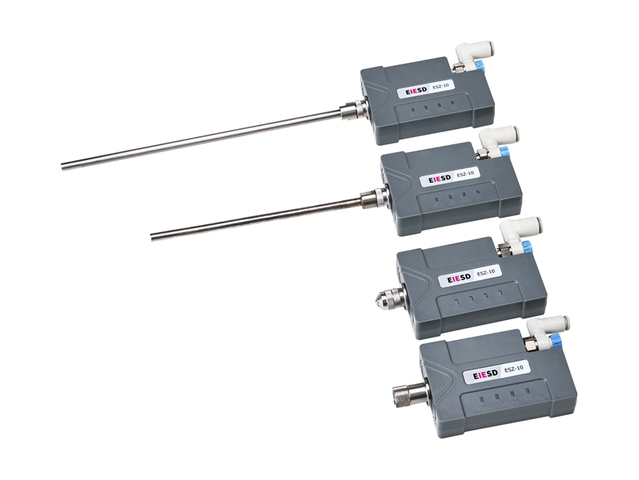
Electrostatic sensors help engineers locate static problems before they cause damage. These devices measure surface voltage without direct contact. Operators can monitor charge levels as materials move through the production line.
Monitoring static electricity provides several benefits:
● Real-time voltage measurement
Sensors display electrostatic levels instantly. Engineers can observe how static changes during different manufacturing steps.
● Identification of high-risk zones
Data shows which machines or processes generate the most electrostatic charge.
● Improved placement of elimination equipment
Once the source of static is known, ionizers can be installed in the most effective positions.
This monitoring approach allows manufacturers to control static electricity more precisely and reduce unexpected electrostatic discharge events.
Factories often use several ionization devices together. Each device type addresses different production conditions. Some equipment neutralizes static across wide areas, while others target specific points where charge forms.
Common static elimination devices include:
● Ion fans
These units generate airflow containing balanced ions. They protect operator workstations and assembly areas by spreading ions across a wide space.
● Ionizing bars
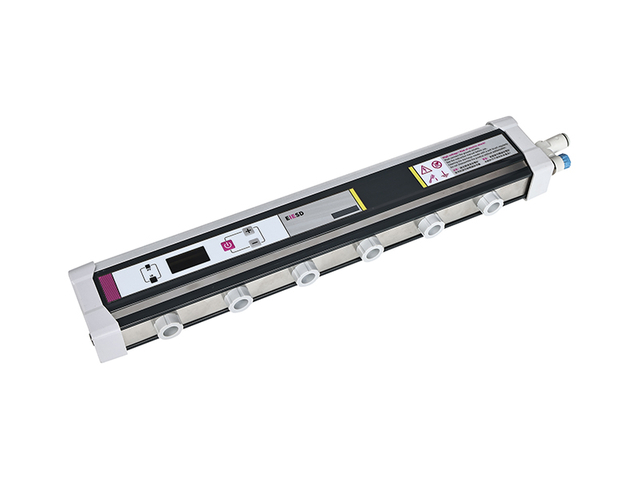
Long ionizing bars are installed above conveyors or film processing lines. They neutralize static on moving materials across the entire width of the production line.
● Ion nozzles
These devices combine compressed air and ionization. They direct ionized airflow toward specific locations where static builds quickly.
Static Elimination Device | Typical Application | Main Function |
Ion fan | Workstations and assembly areas | Wide-area static neutralization |
Ionizing bar | Conveyor and film processing lines | Continuous elimination on moving materials |
Ion nozzle | Localized equipment zones | Targeted removal of concentrated static |
Static charges form during friction and separation in factories. Proper grounding, bonding, and ionization help prevent static risks. GD Decent provides electrostatic sensors and ionizers. Their systems detect charge early and neutralize it quickly. This helps manufacturers prevent static shock and maintain stable production.
A: Static often appears on plastic films, conveyors, or packaging lines.
A: Use grounding, ionizers, and monitoring to Prevent Static Shock.
A: Low humidity allows charge to accumulate on insulating materials.
A: Ionizers release balanced ions that neutralize charged surfaces.
A: Ion fans, ion bars, and electrostatic sensors reduce static buildup.
