
Views: 0 Author: Site Editor Publish Time: 2026-09-11 Origin: Site


Electrostatic discharge (ESD) and particle adhesion act as hidden drivers of yield loss in precision manufacturing. They degrade sensitive equipment, cause latent defects in microelectronics, and create significant operator safety hazards like painful static shocks. These issues rarely stem from a single machine failure. Instead, they originate from environmental conditions on the production floor. Seasonal fluctuations in ambient moisture dictate the severity of static buildup. Winter months present the highest risk. Indoor heating systems drastically lower air moisture, turning standard manufacturing processes into high-voltage generators. Facility managers must address this core problem structurally. Reactive static mitigation often falls short. You must evaluate the trade-offs between two primary structural solutions. Facility-wide humidity control offers broad protection. Targeted ion generation technologies provide localized neutralization. Understanding how these systems interact with your specific production environment ensures optimal yield and operator safety.
The Physical Threshold: Relative humidity (RH) below 40% exponentially increases static charge accumulation; maintaining a 45–55% RH baseline is the industry standard for passive dissipation in both factories and laboratory settings.
Humidification (Macro Control): Facility-wide moisture control provides broad, passive static mitigation and improves operator comfort, but introduces risks related to energy consumption, condensation, and strict cleanroom compliance.
Ionizers (Micro Control): Active ion generation neutralizes charges at the source without altering environmental moisture, making it ideal for localized, high-risk zones and strict cleanroom environments.
The Decision Matrix: Selecting between or combining these systems depends on facility size, ISO cleanroom classification, and specific material handling requirements.
Table of Contents
Friction drives industrial manufacturing. Web handling systems pull films over steel rollers. Conveyor belts transport plastic components across assembly lines. Pick-and-place machines assemble circuit boards at high speeds. These mechanical actions trigger the triboelectric effect. When two dissimilar materials make contact and separate, friction strips electrons from one surface and transfers them to the other. This imbalance generates a static charge. Materials with high electrical resistance, such as polymers, glass, and FR4 circuit boards, hold these charges indefinitely.
Dry air acts as a powerful catalyst for this accumulation. When relative humidity drops below 40%, surfaces lose their natural ability to bleed off electrical charges. The surrounding air lacks the necessary water molecules to facilitate surface conductivity. Dangerous voltage levels accumulate rapidly on production equipment. A standard polyurethane conveyor belt can easily generate over 10,000 volts in a dry environment. This massive voltage constantly seeks a path to ground. It often finds that path through sensitive microelectronic components or human operators, causing immediate damage or painful shocks.
Winter introduces predictable seasonal vulnerability to any facility lacking environmental controls. Cold outside air holds very little absolute moisture. When facilities draw this freezing air inside and heat it to room temperature, the relative humidity plummets. A facility might experience a comfortable 50% RH in July. That same facility can drop to a dangerously low 15% RH in January. This drastic reduction creates predictable, massive spikes in static-related defects. Operator discomfort increases due to constant shocks. Material jams become frequent as charged plastic films cling to machine frames.
Water vapor fundamentally alters surface conductivity across the entire production floor. Moisture in the air naturally settles on materials. It creates a microscopic, slightly conductive film across all exposed surfaces. This invisible film contains dissolved ions from the environment, providing a continuous path for electrons to move. The relationship between humidity and static electricity determines how effectively your facility naturally bleeds off excess voltage before it causes harm.
Increased air moisture content also enables airborne dissipation. The surrounding air becomes less insulative when saturated with water vapor. It allows electrical charges to dissipate directly into the atmosphere. This process requires a specific volume of water vapor to remain effective. It prevents charges from becoming permanently trapped on insulative materials like plastics, ceramics, and glass.
This conductive environment facilitates gradual release. Static charges dissipate slowly to the ground through the moisture layer. They do not discharge suddenly. Sudden discharges cause destructive ESD events that melt microscopic traces inside semiconductor devices. Gradual dissipation protects microchips from latent damage. It prevents combustible airborne powders from igniting in pharmaceutical plants. It ensures smooth material flow through automated packaging lines by eliminating static cling.
Manufacturing facilities must target an optimal operational window for environmental moisture. Industry standards strongly recommend maintaining 45% to 55% RH. This specific range perfectly balances static dissipation with equipment safety. Dropping below 45% exponentially increases ESD risks and particle adhesion. Exceeding 55% introduces severe oxidation risks to bare metal components. High humidity can also cause hygroscopic materials, like certain polymers and solder pastes, to absorb excess moisture and degrade. Precision control within this narrow window is mandatory for stable production.
Maintaining proper humidity directly impacts the human element on the factory floor. Operators frequently experience painful static shocks in dry environments. These shocks cause involuntary muscle contractions. They lead to ergonomic injuries, dropped components, and general workplace anxiety. Proper moisture levels eliminate these shocks entirely. Workplace comfort improves immediately. Operator safety metrics stabilize, and personnel can handle materials without fear of sudden discharge.
Standard HVAC systems cannot achieve precise RH targeting. They primarily control sensible temperature. Cooling cycles inherently remove moisture from the air by condensing it on cold evaporator coils. Heating cycles raise the air temperature, which mathematically lowers the relative humidity percentage. Relying solely on standard rooftop units guarantees wild moisture fluctuations. Dedicated static control infrastructure must supplement existing air handling units to maintain a flatline RH target.
You must map out specific manufacturing vulnerabilities across your floorplan. Different production zones require distinct approaches to static mitigation. Consider these high-risk areas when planning your infrastructure:
SMT Assembly Lines: Surface Mount Technology requires strict ESD control to prevent latent chip damage during component placement and reflow.
Semiconductor Cleanrooms: Particle adhesion ruins silicon wafers. Static charges act like magnets, attracting microscopic dust directly to the product.
Pharmaceutical Powder Handling: Static causes fine powders to cling to weighing equipment and mixing vessels. It disrupts dosage accuracy and creates explosion hazards.
Plastic Film Processing: High-speed web handling generates massive triboelectric charges. Films stick together, repel each other, or wrap around rollers.
Optical Manufacturing: Lenses and mirrors attract airborne contaminants when charged, requiring extensive rework and cleaning.
Establish strict baseline evaluation metrics for these zones. Define acceptable static voltage levels for each process step. Determine allowable particulate counts based on your required ISO classifications. Set energy efficiency targets for the facility to ensure sustainable operation. These metrics guide your infrastructure decisions. They provide measurable data to evaluate system performance after installation.
Production Zone | Primary Static Risk | Acceptable Voltage Limit | Recommended Mitigation Strategy |
|---|---|---|---|
SMT Assembly | Latent component damage | < 100V | Targeted blowers at placement heads |
Powder Blending | Dust explosion, clinging | < 500V | Facility-wide humidification |
Web Converting | Operator shocks, film tearing | < 2000V | Active ionizing bars on rollers |
Wafer Fab | Particle attraction | < 50V | Cleanroom-rated ceiling emitters |
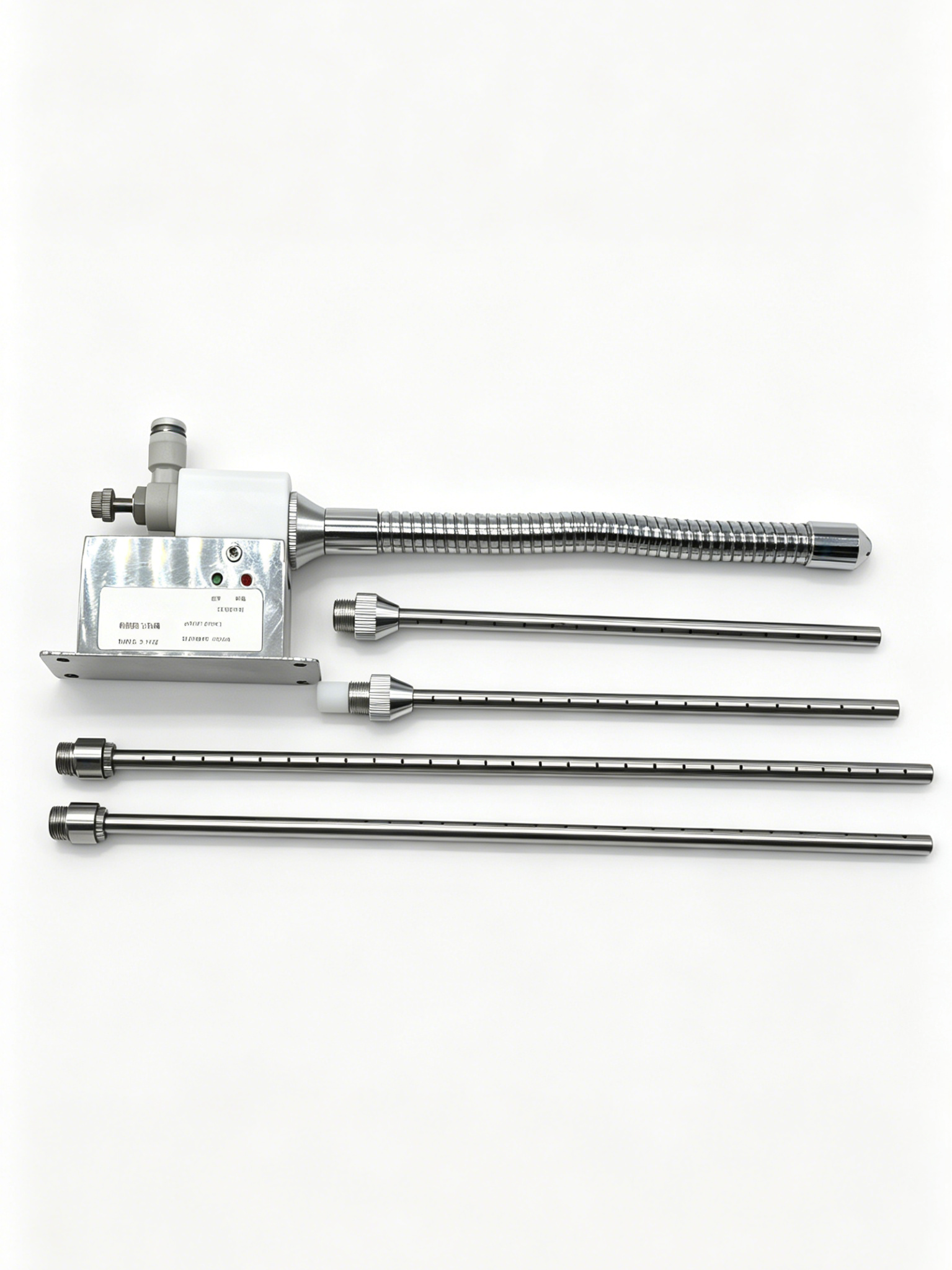
Industrial humidification systems fall into two primary categories based on their thermodynamic operation. Isothermal systems generate pure steam. They boil water using electrical resistance elements or gas burners inside dedicated canisters. The resulting steam mixes directly with the supply air. Adiabatic systems use high-pressure atomization pumps or ultrasonic piezoelectric transducers. They shatter liquid water into microscopic droplets, typically around 10 microns in diameter. These tiny droplets evaporate directly into the airstream, absorbing heat in the process.
Integration depends heavily on your existing facility architecture. Many systems integrate directly into existing Air Handling Units (AHUs). Stainless steel dispersion tubes inject moisture into the supply air ductwork. This method conditions the air before it enters the cleanroom or production space, ensuring even distribution. Alternatively, direct-room installations place atomizing nozzles or steam blowers directly above production lines. This approach suits older facilities lacking centralized ductwork or areas requiring localized humidity boosts.
Facility-wide moisture control provides broad, inescapable coverage. It prevents static generation across all exposed surfaces simultaneously. You do not need to identify every single friction point or moving part. The entire room becomes a naturally static-dissipative environment. This passive mitigation requires zero operator intervention. It protects sensitive materials during transit between workstations, on storage racks, and inside staging areas.
Environmental control offers highly valuable secondary benefits. Adiabatic systems provide significant evaporative cooling. As water droplets evaporate, they absorb sensible heat from the air. This drastically reduces the mechanical cooling load on your HVAC chillers during hot months. Higher humidity also physically reduces airborne dust. Moisture weighs down floating particulates, causing them to settle out of the breathing zone and away from sensitive processes.
Condensation poses a severe hazard to industrial equipment. Excess moisture can accumulate on sensitive machinery, causing rapid rusting. It forms on cold surfaces, uninsulated pipes, and exterior walls during winter. Hygroscopic materials may absorb this moisture, swell, and degrade. You must utilize precise duct and room sensors to prevent over-humidification. High-limit humidistats and dew point monitoring are critical in environments with fluctuating ambient temperatures.
Water quality dictates your ongoing maintenance burden. Adiabatic systems absolutely require Reverse Osmosis (RO) or Deionized (DI) water. Using untreated municipal tap water causes severe mineral dusting. The system atomizes dissolved calcium and magnesium into the air. When the water evaporates, it leaves behind a fine white powder that contaminates cleanrooms and ruins circuit boards. Stagnant water in drain pans also promotes microbial growth. Strict sanitation protocols and automated flush cycles are non-negotiable.
Energy consumption requires careful evaluation during the design phase. Isothermal steam generation demands massive electrical power. Boiling water is inherently energy-intensive. Adiabatic systems use significantly less electricity for the atomization process itself. However, they increase the facility heating load. The evaporation process cools the air. The HVAC system must consume energy to reheat that air back to the required setpoint, shifting the energy burden from the humidifier to the boiler.
Ionizers utilize corona discharge physics to actively neutralize static. The system applies high voltage to sharp emitter pins made of tungsten or silicon. This intense electrical field breaks down nearby air molecules. It creates a dense cloud of positive and negative air ions. Active Ion generation provides a highly controlled, immediate method of static elimination. It does not rely on ambient moisture or surface conductivity to work.
The system must physically deliver these ions to the charged surface to be effective. Blower fans propel the ion cloud across workstations and assembly benches. Compressed air pushes ions through specialized nozzles for pinpoint applications inside machinery. When the ions reach the charged material, the material naturally attracts the opposite polarity. A positively charged plastic film attracts negative ions from the cloud. The surface neutralizes instantly, stopping the static hazard at the source.
Ionizers deliver pinpoint precision exactly where you need it. You can eliminate static at the exact point of friction or separation. Mount an ionizing bar directly over a high-speed web roller. Place an ionizing blower facing a manual component assembly station. Install spot nozzles inside a vibratory bowl feeder. This targeted approach neutralizes charges before they can cause latent damage, shock an operator, or attract airborne particulates.
Cleanroom compatibility represents a major advantage for advanced manufacturing. Ionizers introduce zero moisture into the environment. They carry no risk of microbial growth or waterborne contamination. They do not cause mineral dusting. This makes them the absolute standard for ISO Class 1-5 environments. They are also mandatory in ultra-dry rooms used for lithium-ion battery manufacturing, where any moisture introduction is strictly prohibited and ruins the product.
Localized ionizers face strict spatial limitations. They have a very limited effective range. A standard ionizing blower might only cover a three-foot area on a workbench. An ionizing bar must sit within inches of the moving web to remain effective. They do not provide facility-wide protection. Materials moving between ionized zones on carts or conveyors remain vulnerable to charge accumulation.
Maintenance realities demand strict adherence to cleaning schedules. Emitter pins degrade over time due to the high voltage. The electrical field attracts airborne molecular contaminants, causing silica buildup on the pin tips. This white buildup insulates the pin and drastically reduces ion output. Regular cleaning with isopropyl alcohol is mandatory. You must also perform absolute calibration using charged plate monitors. Uncalibrated ionizers can become unbalanced, actively charging surfaces instead of neutralizing them.
Corona discharge generates trace amounts of ozone as a byproduct. Ozone is a toxic, reactive gas that degrades rubber, plastics, and human respiratory health. Modern ion systems mitigate this risk through advanced engineering. They use optimized emitter materials like single-crystal silicon. They operate at specific high frequencies to keep ozone generation well below OSHA permissible exposure limits, ensuring operator safety.

Humidification acts as a broad preventative measure. It alters the physical environment to stop charges from forming in the first place. Ionizers act as a targeted reactive measure. They neutralize charges immediately after they form at specific friction points. Your choice depends entirely on the specific defects you need to eliminate. Broad environmental control works best for macro-level issues across large spaces.
Map the technological solution to the specific defect. If operators experience shocks walking across the floor, humidification solves the room-wide issue. If macro-level dust attraction ruins automotive paint finishes, moisture control helps particulates settle out of the air. If micro-level ESD damages semiconductor wafers inside a tool, you need ionizers. If high-speed web handling generates massive localized charges that tear the film, ionizing bars provide the necessary rapid neutralization.
Often, facilities require a hybrid approach to achieve total control. They maintain a baseline of 45% RH using centralized steam to prevent general static buildup and protect operators. They then deploy targeted ionizing blowers and bars at specific high-friction points inside the machinery. This layered combination ensures comprehensive protection across all manufacturing stages, from raw material receiving to final packaging.
Scaling these solutions requires careful facility planning. Expanding a centralized humidification system often involves significant mechanical retrofits. You must upgrade AHU capacities, install new stainless steel ductwork, and route RO water lines across the factory. This requires planned downtime and extensive contractor coordination. However, once installed, adding a new production line into the conditioned space requires zero additional static control equipment.
Scaling ionizer deployment offers much greater physical flexibility. You can install a new ionizing bar or blower in minutes without altering facility infrastructure. They simply require standard electrical power or a compressed air drop. This makes them ideal for rapidly changing production layouts or modular cleanrooms. The trade-off involves maintenance scaling. Adding fifty ionizers means adding fifty new assets that require monthly pin cleaning and quarterly balance calibration.
Managing static electricity requires structural solutions tailored to your specific manufacturing environment. Relying on standard HVAC systems leaves your production floor vulnerable to seasonal variations and dry air hazards. To optimize yield and protect sensitive equipment, take the following actions:
Audit your facility's relative humidity levels during winter months to identify specific dry-air vulnerabilities.
Map out high-friction zones on your production lines where triboelectric charging is most severe.
Install targeted ionizing bars or blowers at specific friction points to neutralize charges instantly.
Implement RO/DI water filtration if you choose adiabatic humidification to prevent mineral contamination.
Establish a strict calibration schedule for all static control equipment to ensure continuous, balanced performance.
A: The industry standard targets a relative humidity between 45% and 55%. This range provides enough moisture to create a conductive film on surfaces. It allows static charges to dissipate gradually without introducing condensation or oxidation risks to sensitive machinery.
A: No. Standard HVAC systems are designed primarily for temperature control. Heating cycles drastically lower relative humidity, while cooling cycles remove moisture from the air. Dedicated humidification infrastructure is required to maintain precise moisture levels for static control.
A: Winter air holds very little moisture. When facilities draw cold air inside and heat it, the relative humidity drops significantly, often below 20%. This dry air prevents static charges from naturally dissipating, causing voltage to build up and discharge as painful shocks.
A: No. Ionizers use high voltage to break down air molecules into positive and negative ions. They do not use water or alter the ambient humidity. This makes them ideal for strict cleanrooms and dry rooms where moisture introduction is prohibited.
A: Using untreated tap water in atomizing humidifiers causes mineral dusting. The system atomizes calcium and magnesium into the air. When the water evaporates, a fine white mineral dust settles on equipment, contaminating cleanrooms and damaging sensitive products.
A: Emitter pins typically require cleaning every 30 to 90 days. High voltage attracts airborne particulates, causing silica buildup on the pins. This buildup insulates the tips, reducing ion output and potentially causing the system to become unbalanced.
