
Views: 0 Author: Site Editor Publish Time: 2026-04-22 Origin: Site


Pick a static eliminator bar that gets rid of static fast. This helps keep your production line safe and working well.
Find strong models with tough aluminum housing. Make sure they use good ionization technology. This helps you do less maintenance and makes them last longer.
It is very important to install the bar the right way. Make sure it is grounded and mounted tightly. This helps your static eliminator bar work its best.
Clean static bars often. Clean them every day if it is dusty. Clean them once a month in cleanrooms. This keeps them working well.
Choose a static eliminator that has the right safety certifications. This keeps workers and equipment safe from electrostatic discharge (ESD).
Think about the cost and what you get for it. Spend money on features that help the bar work better. This can also lower maintenance costs over time.
Pick a static eliminator bar that fits your industry needs. This is important for electronics, food production, or pharmaceuticals. This gives you the best results.
Use anti static bars with other static control tools. This helps you solve static electricity problems in a complete way.
You need a static eliminator bar that works quickly. It should keep your production line safe. The best ionizing bar static eliminator removes static fast and evenly. You should check how the bar works with different materials. These can be plastics, films, or metals. Some bars use advanced ionization technology. This helps them work well even in tough places. You can measure how much static the bar removes. You can also check how far the bar reaches. If you work with electronics or packaging, you need a bar that covers wide areas. It should keep static low all the time.
You want a static bar that lasts a long time. The build quality is very important. Many top ionizing bar static eliminator models use strong aluminum housing. This protects the bar from damage. It also helps the bar last longer. Reliable ionization technology keeps the bar working well. It works even when conditions change. You want a bar that needs little maintenance. This saves you time fixing it. Here are some features that make a static eliminator bar strong:
Aluminum housing gives strength and protects the bar.
Ionization technology keeps performance steady.
Low maintenance lets you use the bar in tough factory settings.
If you pick a bar with these features, it will stand up to daily use. It will keep your production line running.
You must install your static eliminator bar the right way. This helps you get the best results. Most bars need proper grounding and secure mounting. You should put the power supply close to the bar. Keep it away from dust and heat. High voltage cables must connect well and stay grounded. You plug the bar into a grounded outlet. Never remove the ground prong. Here is a table that shows common installation needs:
Requirement | Details |
|---|---|
Grounding | The metal case and power supply must be electrically grounded. |
Mounting | Use weld bolts for mounting; ensure proper positioning and secure attachment. |
Power Supply Location | Place the power supply close to the static eliminator, away from contamination and extreme heat. |
High Voltage Cable Installation | Use a standard 72 inches length of high voltage cable; ensure proper connection and grounding. |
Electrical Connection | Plug into a properly grounded outlet; do not remove ground prong from the plug. |
You also need to clean your static bars often. If your factory is dirty, clean the bar every day with a soft bristle brush. In clean rooms, clean it once a month. Check the bar as needed based on your environment. Regular cleaning keeps the ionizing bar static eliminator working well. It helps you avoid downtime.
You need to keep workers and equipment safe from static electricity. An ionizing bar static eliminator helps control ESD risks. These bars remove static electricity from charged workpieces. This stops sudden ESD that can hurt electronics or start fires. Many factories use static eliminators to stop static problems early.
Ionizing bars take away static electricity from workpieces.
They stop ESD by removing electric charges.
Static eliminators fix static problems in factories.
You should check safety certifications before installing a static eliminator bar. Different jobs need different certifications. Here is a table with common certifications:
Certification Type | Requirement Description |
|---|---|
MIL-STD-1686 | Needed for electronics manufacturing |
ATEX/IECEx | Required in explosive environments |
ISO Class 5 | Used for medical device production in cleanrooms |
You must follow these rules to keep your workplace safe. Certified static bars protect your team and your products.
You want the best deal for your money. The price of top ionizing bar static eliminators depends on features and how well they work. Some models are very small, have built-in amplifiers, or remove dust well. Others have lights or show real-time data. You can see how features match performance in this table:
Model | Features | Performance Characteristics |
|---|---|---|
SJ-LM | Ultra-compact, built-in amplifier | High mounting freedom in limited spaces |
SJ-LG | High-power, dust removal | Supersonic ion delivery for effective removal |
SJ-LF | Anti-static blower, visual indicators | Instant static verification and alarm system |
SJ-M | Ultra-small, high-performance | Versatile for spot and wide-area, high-temp use |
SK | Inline electrostatic sensor | Real-time monitoring for manufacturing efficiency |
You should look at features and performance before buying. You get more for your money when you pick a static bar that fits your needs. This saves money and helps your factory work better.
You need a static eliminator bar that works for your industry. Some bars are made for solar and photovoltaic factories. These bars stop materials from sticking and prevent mistakes. Chemical factories need special static bars to stop dangers. Food factories use static bars to keep food clean. Lithium battery factories use static bars to protect winding and cutting. Semiconductor plants use static bars to lower defects.
You can use slim bars like IZT44/45. These bars fit in tight spaces and have many emitters. You can put them between machines. They do not need air. You can set them up in different ways to fit your factory.
Tip: Always make sure your static eliminator bar works with your process. This helps you avoid trouble and keeps your factory safe.
You get a bar-type static eliminator that covers wide surfaces. EXAIR uses shockless design, so you can touch the bar safely. The bar comes in many lengths, from short to long, to fit your machines. It works with a high-voltage power supply. You can use it in places with dust or heat. The bar has rugged aluminum housing for extra strength.
You will like the fast static removal. The EXAIR static bar works well on plastics, films, and paper. You can install it easily on most machines. The bar does not need much maintenance. You can trust it to work in tough factory conditions. The design keeps workers safe from electric shock.
You may need to buy a separate power supply. The bar works best when you clean it often in dusty places. Some users want more advanced monitoring features.
You can use the EXAIR static eliminator bar in packaging, printing, and plastics factories. It works well for flat-panel production and film handling. If you need to cover a wide area, this bar is a good choice.
You get a slim, lightweight static bar. SMC offers models that fit in tight spaces. The bar uses pulse AC or DC ionization. You can choose models with or without air assist. The bar has LED indicators to show working status. You can connect it to a controller for remote monitoring.
You will find the SMC ionizing bar static eliminator easy to install. The slim design fits between machines or inside equipment. The bar works well for both spot and wide-area static removal. You can check the bar’s status with the LED lights. The bar uses little energy.
You may need to clean the emitters often in dirty areas. Some models need a separate controller for advanced features. The bar may not cover very large surfaces as fast as blower types.
You can use the SMC static bar in electronics assembly, film processing, and label printing. The bar fits well in narrow spaces and on automated lines. If you need flexible installation, SMC is a smart pick.
You get a high-tech ionizing bar static eliminator with smart features. The Keyence static bar uses Hi-Power I.C.C. This system adjusts ion balance by sensing the charge on your materials. The bar has maintenance-free electrode probes. You only need to clean them once a year. The bar removes static in just 0.1 seconds and keeps ion balance at ±3 V. You get 10 times the efficiency of older models.
Note: Keyence stands out for its automatic adjustment and low maintenance. You save time and get better results.
Here is a table showing what makes the Keyence static bar unique:
Feature | Description |
|---|---|
Hi-Power I.C.C. | Adjusts ion balance based on the charge of the target, making static removal faster and smarter. |
Maintenance-Free Electrode Probes | Lowers cleaning needs from weekly to yearly, saving you time and effort. |
Efficiency | Delivers 10x the efficiency of traditional bars, with fast static removal and stable ion balance. |
You will see fast and even static elimination. The bar works well for sensitive electronics and cleanrooms. You do not need to clean the bar often. The smart system keeps ion levels safe for your products. You get real-time feedback and stable performance.
You may pay more for advanced features. The bar works best when you follow the setup guide. Some users want more size options.
You can use the Keyence static bar in semiconductor plants, medical device factories, and high-speed packaging lines. The bar is perfect for places where you need top efficiency and low maintenance.
Tip: Bar-type static eliminators like these give you full-width coverage. They work best for flat surfaces and wide materials. If you need focused or flexible static removal, you can look at blower-type or nozzle-style options.
This static eliminator uses photoionization technology. It does not need high voltage or air assist. You can use it where other static bars may not work. The device uses ultraviolet light to make ions. These ions remove static charges. The small size lets you put it in tight spaces. You do not have to worry about electrical noise or sparks. The Hamamatsu Photo Ionizer works quietly and safely.
You get static elimination without touching anything. The photoionizer does not make ozone, so your workspace stays clean. You can use it in places like cleanrooms or electronics assembly lines. The device works well with delicate materials. These materials cannot handle direct contact or strong airflow. You do not need to clean or replace electrodes, so maintenance is low.
The static elimination range is shorter than some bar-type models. The device works best when it is close to the surface. You need to make sure nothing blocks the ultraviolet light. Some users may want more power for bigger production lines.
You can use the Hamamatsu Photo Ionizer in semiconductor manufacturing, medical device assembly, and precision optics. The device fits well in places that need low particle generation and high cleanliness. If you need a static eliminator for sensitive or small jobs, this model is a good choice.
This static eliminator bar is made for fast-moving production lines. The 4103 model uses advanced ionization technology. It removes static electricity right away. The slim shape lets you install it in narrow spaces. You can pick different lengths to fit your equipment. The bar uses little power and works well even in tough places.
You see results right away with the 4103 High Speed Static Eliminator Bar. The device stops product defects and machine jams. It does not touch your materials. You can count on it for nonstop work in busy factories. The bar works in many industries like printing, packaging, electronics, plastics, textiles, and powder coatings.
Here is a table that shows how the 4103 model helps different areas:
Application Area | |
|---|---|
Printing | Stops product defects and machine jams during production. |
Electronics Manufacturing | Lowers risks of electrostatic discharge (ESD) damage. |
Plastics | Reduces static cling and keeps quality high. |
Textiles | Makes products better by removing static issues. |
Packaging | Keeps things running smoothly and stops dust from sticking. |
Powder Coatings | Stops defects and misfeeds caused by static electricity. |
You can also see the main advantages in this list:
Uses advanced ionization technology to remove static electricity fast.
Stops product defects and machine jams without touching materials.
Works for many industries like printing, packaging, and electronics.
You may need to move the bar for best results. The bar works best when you keep it clean and free from dust. Some users may want extra monitoring features for remote checks.
You can use the 4103 High Speed Static Eliminator Bar in high-speed printing presses, automated packaging lines, and electronics assembly. The bar is great for any job where you need fast, reliable static removal. If you want better product quality and less downtime, this ionizing bar static eliminator is a top pick.
You want to pick the best anti static bar for your factory. You need to compare each static eliminator bar. The table below shows main features, strengths, drawbacks, and best uses for each model. This helps you choose the right one for your industry.
Model / Brand | Main Specs & Features | Strengths | Drawbacks | Ideal Use Cases |
|---|---|---|---|---|
EXAIR Static Eliminator Bar | Bar-type, shockless design, multiple lengths, rugged aluminum housing | Fast static removal, easy installation, safe to touch | Needs separate power supply, frequent cleaning in dust | Packaging, printing, plastics, flat-panel production, film handling |
SMC Ionizing Bar | Slim, pulse AC/DC ionization, LED indicators, air assist option | Fits tight spaces, energy efficient, flexible install | Frequent emitter cleaning, controller needed for some | Electronics assembly, film processing, label printing, automated lines |
Keyence Static Bar | Hi-Power I.C.C., maintenance-free probes, fast removal, real-time feedback | Smart adjustment, low maintenance, high efficiency | Higher cost, best with proper setup | Semiconductor plants, medical devices, high-speed packaging, cleanrooms |
Hamamatsu Photo Ionizer | Photoionization, no high voltage, compact, no ozone, low maintenance | Non-contact, safe, quiet, good for delicate materials | Shorter range, needs clear line of sight | Semiconductor manufacturing, medical assembly, optics, cleanrooms |
4103 High Speed Static Bar | High-speed ionization, slim, multiple lengths, low power | Instant results, stops defects, works nonstop | Needs repositioning for best results, regular cleaning | Printing presses, packaging lines, electronics, plastics, textiles, powder coatings |
Each static bar works best for certain jobs. For example, the EXAIR bar is good for packaging and plastics. The SMC bar fits well in electronics assembly. The Keyence bar is great for cleanrooms and high-tech factories. The Hamamatsu photo ionizer is good for delicate or small parts. The 4103 High Speed Static Eliminator Bar is best for fast production lines.
Tip: Match your static eliminator bar to your industry. In automotive assembly, you stop dust and dirt from sticking to parts. In food processing, you keep products moving and stop dust contamination. In pharmaceutical cleanrooms, you lower contamination risk. In electronics, you protect against ESD damage. In semiconductor production, you reduce defects. In plastic molding, you stop parts from sticking and improve quality.
You get the best results when your static bar fits your process and environment. Use this table to help you decide and make your factory safer and better.
You need to pick the right static eliminator bar for your job. First, look at what materials you use. Thin films need lower voltage, about 5 to 10 kV. Thick plastics or metals need higher voltage, up to 30 kV. Check how big your production line is. Wide surfaces work best with bar-type static bars. Small or delicate parts need compact or photo ionizer models.
Think about where you work. Cleanrooms need static bars that make few particles. Dusty factories need bars with self-cleaning features. Some static bars fit in tight spaces or between machines. This helps you get good results without changing your setup.
Tip: Make sure your new static eliminator bar works with your equipment. This saves time and money.
You want to get the most for your money. Look at more than just the price. Energy use, maintenance, and bulk discounts change your costs. DC static bars use less energy, about 15W. AC models use more, about 40W. Self-cleaning bars help you avoid downtime and lower maintenance costs. Some bars need new nozzles or emitter pins after a while. You can save money by buying more units at once. Bulk discounts can be 15% to 30%.
Here is a table to help you compare budget factors:
Cost Consideration | Details |
|---|---|
Energy Consumption | DC: 15W, AC: 40W |
Maintenance Intervals | Self-cleaning units reduce downtime |
Consumables | Nozzle and emitter pin replacements |
Bulk Discounts | 15-30% off with larger orders |
You should balance upfront costs with long-term savings. A reliable anti static bar can lower your total expenses over time.
You must keep your workplace safe. Pick static eliminator bars that meet standards like IEC 61340-5-1 and ANSI/ESD S20.20. These rules protect workers and products from electrostatic discharge. Look for bars with a discharge voltage between 5 and 30 kV. The best static bars keep ion balance within ±10V and have a decay rate under 3 seconds. This is important for sensitive electronics.
Always match the static bar’s voltage to your material’s needs. Thin films need less voltage. Dense materials need more. Following these rules helps you avoid ESD risks and keeps your production line safe.
Choose static bars with:
Certified safety standards
Fast decay rates
Stable ion balance
Note: Safe and compliant static eliminator bars protect your team and your products. You also meet industry rules and avoid costly mistakes.
You can make your production line better by using anti static bars. These devices help control static electricity in many places. First, find spots where static builds up. Use a static meter to check surfaces and materials for static. After you find the problem, put static bars in those areas.
Anti static bars work well where things move fast or rub together. Put the bars near conveyor belts, rollers, or packaging stations. You can also use grounding straps for extra safety. Some factories use anti static treatments on materials that attract dust. This keeps products clean and lowers defects.
You need to pick the right static eliminator bar for your process. Wide ionizing bars cover big surfaces. Precision models work on small areas like assembly lines. You can choose bars with different lengths and ways to mount them. Many static bars fit between machines or in tight spaces. You can connect them to controllers for remote checks.
Tip: Clean your static bars often. Dust and dirt can make them work less well. Use a soft brush or cloth to keep the emitters clean.
Here is a simple table to help you know where to put anti static bars:
Area | Recommended Solution |
|---|---|
Conveyor Belts | Wide ionizing bar |
Assembly Lines | Precision static bar |
Packaging Stations | Anti static bar + grounding |
Cleanrooms | Customizable static bar |
You can change static elimination systems to fix special factory problems. Start by checking for static electricity during handling or processing. Use a static meter to measure the charge. If you find static, pick the right device to stop it.
You have many ways to customize:
Choose ionizing bars with adjustable ion output for different materials.
Make systems with more bars for wide coverage in big factories.
Pick small units for tight spaces or delicate products.
Use anti static bars with built-in sensors for real-time checks.
Put anti static treatments on materials that attract dust.
You can also make solutions for cleanrooms or places with strict static control. Custom units help you meet safety rules and keep products safe. Match the device to where the static comes from. For example, use wide bars for big surfaces and precision bars for small parts.
Note: Custom static elimination systems help you lower defects, make products better, and protect workers from ESD risks.
You get the best results when you use anti static bars with other static control products. Grounding straps, anti static mats, and ionizing blowers can work together. This makes your factory safer and more efficient.
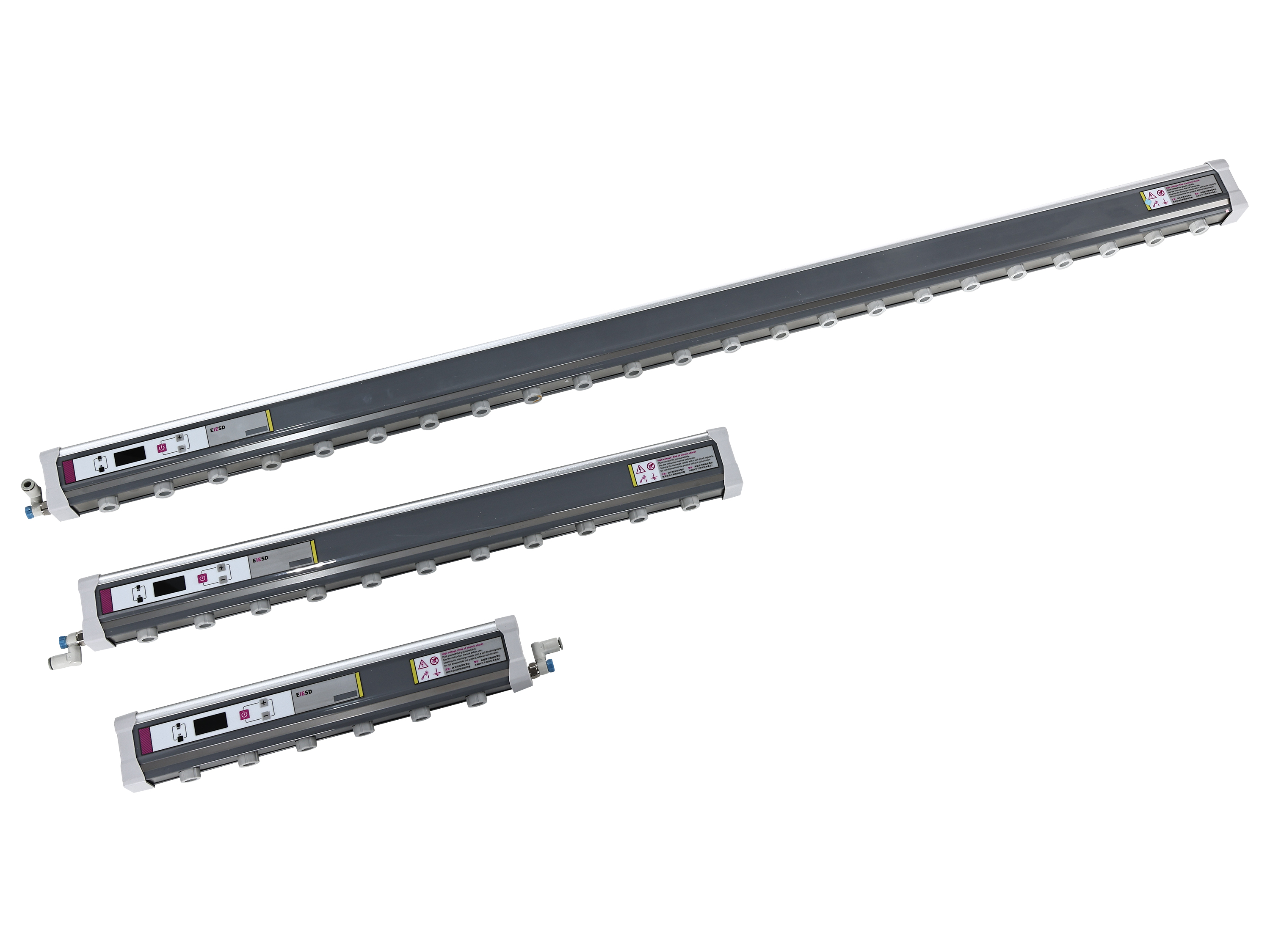
You want your products to be good every time. Ionizing bars help you reach this goal. These devices take away static electricity from your production line. When you use anti static bars, you see your products get better and you make more.
You can save up to 4 million gallons of water each year. This helps your company’s sustainability goals.
You get zero failures in routine can inclusion tests. This means your products pass quality checks every time.
You notice an efficiency boost of 0.6%. Even small gains like this can make a big difference in your output.
You find better taste outcomes in blind trials. This leads to longer shelf life and higher product quality.
You can trust static eliminator bars to keep your process steady. They help you give better products to your customers.
You need to keep your team safe. Static electricity can cause shocks or damage electronics. Ionizing bars protect your workers by removing static charges from surfaces and objects. These devices make a mix of positive and negative ions. The ions pull in and cancel out static charges in the air. This lowers the risk of electrostatic discharge (ESD) in your workplace. You have fewer accidents and your equipment stays safe.
Tip: Using static bars helps you build a safer work environment and keeps your production running smoothly.
You want your machines to run without stopping. Static electricity can cause jams, waste, and slowdowns. Ionizing bars help you avoid these problems. You can check how things are working and make changes with advanced static control systems. This makes your factory work better.
Ionizing bars stop static from causing wrong placement of tamper sleeves. This keeps your machines working as they should.
When you put a static eliminator at the unwind, you stop static charges from building up. This reduces waste and downtime.
Ionization bars remove static that can cause jams and product quality issues. You see fewer stoppages and less waste.
Many static bars meet safety standards like UL 62368-1. This helps you stay compliant and confident in your equipment.
You get more uptime and higher productivity when you use anti static bars. Your factory works better, and you meet your production goals with less effort.
You learned about the top anti static bars for 2026. Each static bar works well for different jobs. Pick a static eliminator bar that fits your factory. Check how it works, how strong it is, and if it keeps people safe.
Tip: Choose a static bar that controls static well and lasts long. This keeps your factory running smoothly and safely.
An anti static bar helps take away static electricity from surfaces. The bar lets out ions that cancel out electric charges. This keeps your products safe and stops dust from sticking to them.
You put the static eliminator bar close to where static builds up. You connect it to a grounded power supply. Always follow the maker’s instructions to get the best results.
You should clean your static bar every day if your factory is dusty. In cleanrooms, clean it once a month. Use a soft brush to gently remove dirt from the emitters.
Yes, you can use static bars in food factories. They help keep food clean and stop dust from sticking. Pick models that have food safety certifications.
You see static eliminator bars in electronics, packaging, printing, plastics, textiles, and medical device factories. These bars help protect both products and workers from static electricity.
You look at what materials you use and how fast your line moves. Wide surfaces need bar-type static bars. Small parts work better with compact or photo ionizer models. Match the bar to what your factory needs.
